The crew of the record-setting Soyuz 11 mission died just 30 minutes before they were due to land back on Earth, in a shocking emergency they had no hope of surviving.
The Soyuz 11 Mission
Human space exploration is seen as a vital step in securing humanity's long-term survival alongside greater understanding of the universe. The passion and determination to obtain medical and environmental data, technological advances and more through space travel is arguably the one thing that unites all nations across the planet.
Space programs far and wide come together, each seeking answers to fundamental scientific questions, while on the quest for groundbreaking discoveries.
Over the years, humanity's pursuit of answers and insight into space has come at a price, with some astronauts losing their lives. On June 30, 1971, commander Georgi Dobrovolsky, flight engineer Vladislav Volkov and research engineer Viktor Patsayev were found dead in their seats on the Soyuz 11 craft after an apparently successful re-entry and landing back on Earth.
The Tragic Details
Soyuz 11 was the only crewed mission to board the world's first space station, Salyut 1, and it launched on June 6, 1971. In a devastating twist, the crew aboard were the back-up astronauts for this mission, stepping in for the prime crew after a medical X-ray exam four days before launch suggested original flight engineer Valery Kubasov could have tuberculosis. According to the mission rules, the prime crew was replaced with the back-up crew, but it later transpired Kubasov did not have TB.
The back-up crew had spent 24 days in space which, at the time, had been the longest period anyone had spent in space, but it ended in horror.
Cause of Death
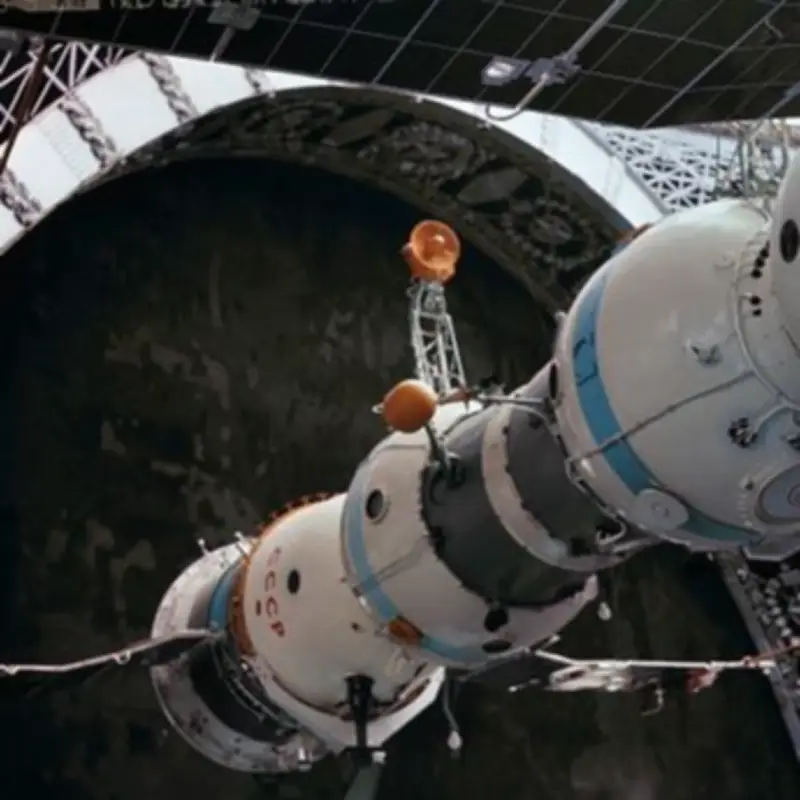
NASA confirmed shortly before their re-entry into the Earth's atmosphere, tragedy struck and the cosmonauts died as a result of the sudden depressurisation of their spacecraft. Explosive bolts separated the Soyuz into its three components, with the crew inside the middle bell-shaped descent module.
The space agency states: The shock from the explosive bolts jarred open a pressure equalisation valve that normally opened only once the spacecraft was descending on its parachute, well inside the atmosphere. But in this case, the valve opened to the vacuum of space and the capsule's air escaped in less than one minute. There is evidence the cosmonauts tried to respond to the emergency by manually closing the valve, a process that took several minutes. They rapidly lost consciousness as the pressure continued to drop and died within two minutes. Not wearing pressure suits, they had no hope of surviving.
As the pressure drop was so rapid, it caused the water in the air to condense, creating a freezing fog inside the cabin. Telemetry records show the cosmonauts' heart rates spiked into severe panic. Though they tried to close the valve, biomedical sensors tracking the crew showed their brains were starved of oxygen. Decompressing at that altitude meant the air was being actively ripped from their lungs. Within around 30 to 40 seconds of the valve opening, all three men lost consciousness.
Aftermath
The capsule continued automatically, floating silently through space before re-entering Earth's atmosphere and landing with the dead bodies of the crew inside. NASA explained: The spacecraft's parachute opened as planned and rescue helicopters touched down alongside the capsule as it made a soft landing 320 miles east of the city of Zhezkazgan in Soviet Kazakhstan. Recovery forces opened the hatch to find the lifeless bodies of the cosmonauts still strapped in their seats. Resuscitation efforts by rescue personnel proved ineffective.
The crew were not wearing pressure suits. Since the tragedy, all cosmonauts have worn spacesuits during Soyuz launches and landings.