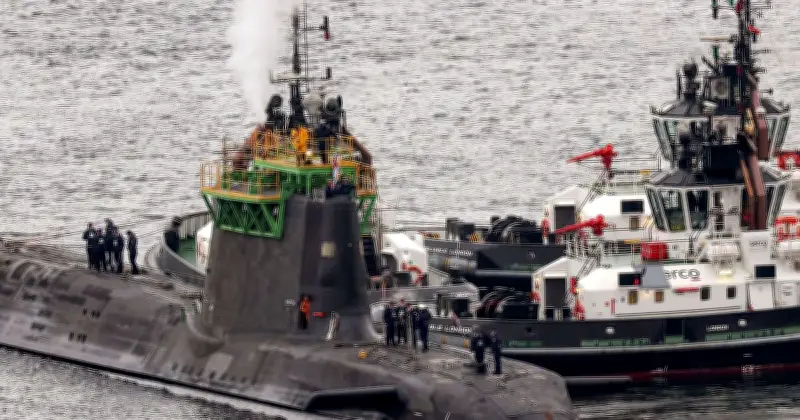
Royal Navy sailors are being trained to use high-pressure water hoses to defend Britain's nuclear-armed submarines against potential drone attacks. The measure provides a last line of defence for the £4billion Vanguard-class submarines, which carry Trident II ballistic missiles.
Fire hoses as a last line of defence
The hoses, known as centre-fed reels, are kept on submarine decks when the vessels are alongside at HM Naval Base Clyde in Faslane, Scotland. They are fitted with pistol-grip nozzles, allowing sailors to direct jets of water at drones that get past other security measures.
The Navy says that its bases are protected by several layers of security, including physical barriers, patrols, surveillance and counter-drone technology. However, The Sun's investigation into the matter has raised questions about the vulnerability of the UK's most sensitive military installations to increasingly sophisticated aerial threats.
Faslane's location and drone activity
A source told The Sun: "You have to use what you've got."
Faslane, which houses Britain's nuclear submarine fleet, is situated on Gare Loch. While the surrounding geography offers protection against hostile submarines, the narrow stretch of water and accessible hills and public roads nearby could give potential attackers opportunities to launch drones at close range. The base has been a suspected target of suspicious drone activity since at least 2018.
Exposure of Vanguard-class submarines
Drone sightings near military installations have reportedly increased sharply, from nine a year in 2019 to 340 over the past 12 months. Experts have warned that Faslane was of clear interest to hostile states and questioned whether sufficient measures were in place to protect the submarines.
Britain's Vanguard-class submarines are particularly exposed when operating on the surface or moored in port. The vessels can spend extended periods alongside between deployments. The hose drills are intended to help crews respond to small and medium-sized first-person-view (FPV) drones. Longer-range attack drones, including Iranian-designed Shaheds, may be engaged by RAF fighter aircraft, depending on the circumstances.
Ministry of Defence response
The Ministry of Defence said: "The first duty of Government is national security, and we take the security of our people, sites and local communities extremely seriously, in particular those housing nuclear capabilities.
"The protection of our bases is kept under constant review, with a multi-layered approach that includes physical barriers, patrols, surveillance, monitoring, and counter-drone capabilities.
"Through the Defence Investment Plan, we are investing an additional £470million over the next four years to strengthen the protection of UK military sites."