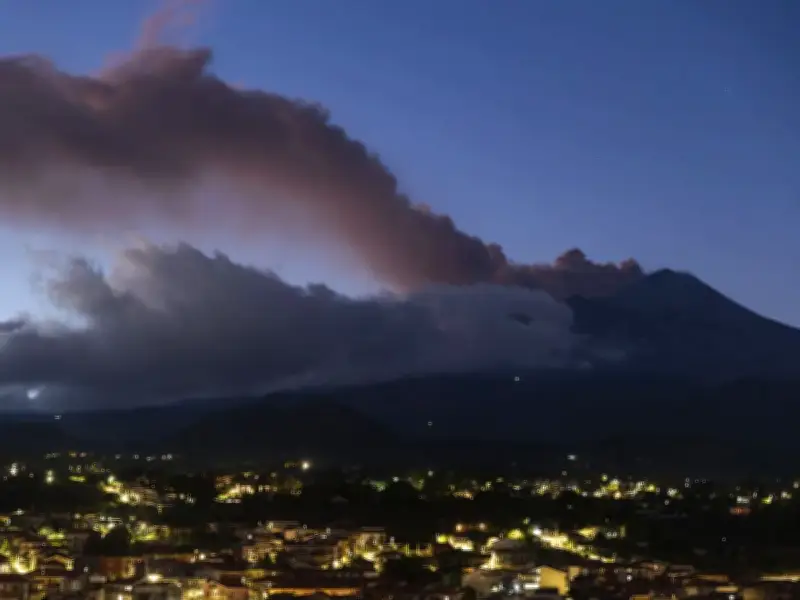
Mount Etna has erupted, sending a 4-kilometre ash cloud into the sky and causing travel chaos for holidaymakers to and from Italy. Catania Airport in Sicily has grounded all flights for a third consecutive day, with the suspension extended until 11.59pm tonight (September 28). Flights to and from the destination have been cancelled or delayed.
Red warning in force
The ash cloud, emitted from the north-east crater, was seen moving towards Catania, closing two airspace sectors. Following the latest eruption, a red flight warning is in force — the highest level of alert on a scale of four.
Passengers flying to and from Catania Airport have been urged to check the status of their flight before travelling to the airport, The Express reports. Several flights have since been cancelled for tourists, including those to and from UK destinations.
Why ash is dangerous to aircraft
Volcanic ash can pose a serious danger to aircraft, which is why eruptions can lead to widespread flight cancellations even when airports themselves are not directly threatened by lava. The tiny, abrasive particles can be sucked into jet engines, where they can damage components and potentially cause engines to lose power.
Ash can also affect aircraft instruments, reduce visibility and make runways more slippery, particularly when the ash is wet. The US Federal Aviation Administration (FAA) warns that flying into a volcanic ash cloud can be “exceedingly dangerous” and says avoiding encounters with ash is the most important precaution.
Volcanic ash clouds can also be difficult for pilots to spot and are not normally detected by airborne or air traffic control radar.