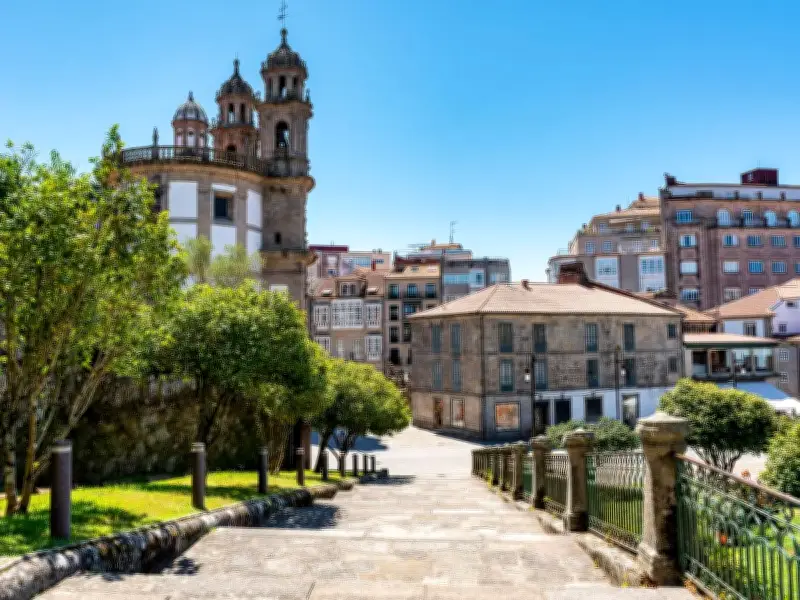
Archaeologists in Spain have unearthed the remarkably well-preserved remains of children and a chaplain at the Convent of Santa Clara in Pontevedra, with the brains of the deceased transformed into a 'soap-like' consistency.
The bodies, dating from between the 16th and 19th centuries, are thought to have been interred before the site's final renovation in 1915. The extraordinary preservation is the result of saponification, a process that occurs in damp conditions when fatty tissue in the brain undergoes a chemical transformation, converting into a waxy, soap-like material.
Rare phenomenon on the Iberian peninsula
According to EBSCO, the process takes place when "soap is produced from fats through a reaction with alkaline substances". These saponified brains are reportedly the first instances of their kind found on the Iberian peninsula, with just three other documented cases worldwide - in Italy, Chile and Argentina.
Ongoing examinations of the skeletal remains continue, including analysis of the young children - one still found wearing footwear - alongside the well-preserved chaplain, as researchers work to establish the precise cause of death and understand why the youngsters were laid to rest on convent grounds.
Investigations and historical artefacts
Regarding the chaplain, one hypothesis for his remarkable preservation points to the biological composition of the surrounding subsoil. What's certain is that he was laid to rest before the convent's altar, dressed in his clothing and footwear.
Officials are carrying out additional investigations to establish whether these burials followed conventional practices of the era or represented something more unusual. Prior to further work and laboratory examination, the discoveries have been unveiled to considerable acclaim by Pontevedra Provincial Council Vice President Rafael Dominguez.
Emphasising the significance of the discoveries, Mr Dominguez described the convent site as "pioneering on a global scale" and noted it provided a window into Pontevedra's past. Overall, the excavation has also granted the team understanding not only of Pontevedra's inhabitants, but the convent's structure as well. Additionally, they've unearthed roughly 3,000 historical artefacts, including coins and glass, alongside ceramic fragments stretching back to the 14th Century.