Baby Delivered on Caribbean Airlines Flight from Jamaica to New York
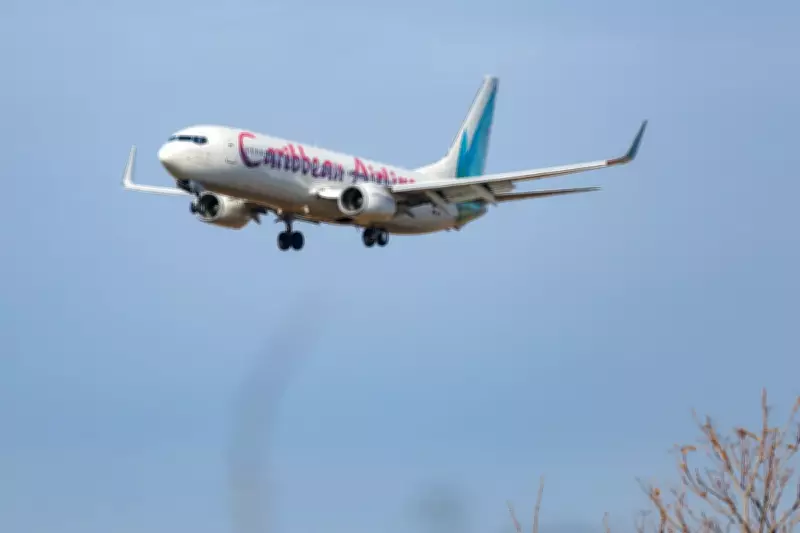
A routine passenger flight from Jamaica arrived at New York's John F. Kennedy International Airport with an unexpected addition after a woman gave birth midair, potentially creating a complex situation regarding the newborn's citizenship. The "medical event" occurred on a Caribbean Airlines flight from Kingston on Saturday, as confirmed by a news release from the carrier.
Upon landing, the mother and newborn were attended to by medical personnel and are receiving necessary care, according to the statement. The airline did not disclose the baby's gender or the specific stage of the four-hour flight when the birth took place.
Air Traffic Controller's Lighthearted Suggestion
In a conversation between the pilot of flight BW005, designated Caribbean 5, and the Queens airport's tower, an air traffic controller humorously proposed a name for the baby. After the pilot confirmed the birth by responding affirmatively to the question "Is it out yet?", the controller said, "All right, tell her she's got to name it Kennedy."

The pilot responded with laughter, saying, "Ah, Kennedy, will do," according to a transcript obtained by CBS News. This exchange added a moment of levity to the unusual in-flight incident.
Citizenship Debate and Legal Complexities
The birth quickly prompted a debate about the infant's citizenship, which remains uncertain due to a lack of information about the parents' status and the plane's exact location at the moment of birth. If either parent is already a U.S. citizen, the baby will automatically acquire citizenship. Otherwise, U.S. citizenship laws come into play.
By law, U.S. airspace is defined as within 12 miles of the coastline, equivalent to its territorial waters. "The rules applicable to vessels obviously apply equally to airplanes," states a federal document. "Thus a child born on a plane in the U.S. or flying over its territory would acquire U.S. citizenship at birth."
U.S. Customs and Border Protection typically requires documentation such as an excerpt from the aircraft's medical log or captain's log, reflecting the time, latitude, and longitude of the birth. Under the 14th Amendment to the U.S. Constitution, all persons born or naturalized in the U.S. and subject to its jurisdiction are citizens.
An executive order issued by Donald Trump at the start of his second presidency, which restricted U.S. citizenship to children born only to citizens and lawful permanent residents, was blocked by a federal court. It is awaiting a final ruling by the Supreme Court after oral arguments on April 1.
Historical Context and Airline Policies
The U.S. government does not publish figures on babies born on international flights within its airspace. The most recent research is a 2019 study by a professor at Ohio's Bowling Green State University, which recorded 74 births on 73 commercial flights between 1929 and 2018, with two infants not surviving.
Airlines generally restrict pregnant women from flying beyond 36 weeks' gestation and require medical clearance for those beyond 28 weeks. Caribbean Airlines' policy allows pregnant passengers to travel without medical clearance through the end of their 32nd week of pregnancy.
In its statement, Caribbean Airlines confirmed that no emergency was declared during the flight and that the mother and her family have requested privacy. "The airline commends the professionalism and measured response of its crew, who managed the situation in accordance with established procedures, ensuring the safety and comfort of all onboard," the statement concluded.