British Airways flight BA295 declared a mid-air emergency nearly five hours into its journey to Chicago O'Hare International Airport after a steep descent over Ireland led to oxygen masks being deployed for passengers and crew.
The plane left London Heathrow's Terminal 5 at 11:50am with an expected flight time of eight hours and 40 minutes. Flight-tracking data showed the aircraft descended rapidly from a cruising altitude of 37,000ft down to around 9,000ft.
Emergency descent and squawk 7700
The flight crew issued a squawk 7700 code - the international aviation signal for a general emergency - shortly after beginning the steep descent. The standard protocol for controlled rapid descents to lower altitudes, typically below 10,000 feet, often indicates a cabin depressurisation event, according to AirLive.net.
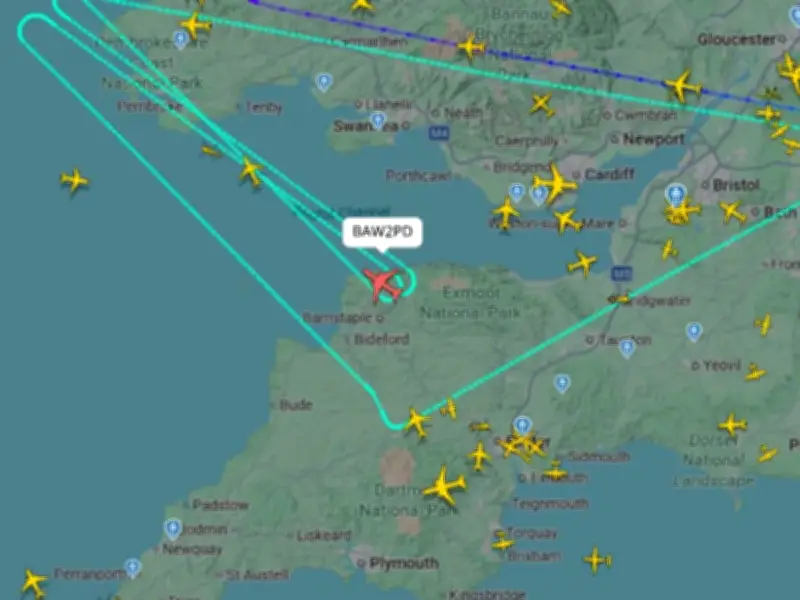
The plane burned fuel off the coast of Wales before landing back at London Heathrow at about 5pm, nearly five hours after takeoff. British Airways said the pilot turned the plane around due to a "technical issue".
Passenger accounts and airline response
Passenger Tom Nicholls told The Mirror there was a "sudden bit of turbulence" during the emergency. Nicholls explained: "The plane adjusted but it didn’t feel like it was descending rapidly. I’d say the pilots did a very good job."
Nicholls said the oxygen masks popped out soon after and there was a bit of uncertainty onboard. "The couple in front couldn’t get to theirs but by the time they’d found a spare seat with a mask, the captain announced we were below 10,000ft so they were not needed." He praised British Airways, adding the airline handled the emergency "pretty well" and that passengers were "all booked onto different flights tomorrow".
British Airways said in a statement: "The safety of our customers and crew is always our top priority, and the aircraft landed safely after our highly-trained pilots returned to Heathrow following a technical issue. Customers disembarked the aircraft normally and our teams are working to get their travel plans back on track as quickly as possible."
Fuel burn and recent similar incident
Some 26,000 people followed the dramatic events on the website flightradar24 as the plane flew back and forth between the north coast of Devon and south-west Wales as it burned fuel so it would be light enough to land. Planes typically take off much heavier than they can land, and airliners must either burn or dump fuel before an emergency landing to reduce the aircraft's total weight to the same maximum landing weight. Landing while carrying too much weight runs the risk of extreme physical stress on the landing gear, wings and fuselage.
The incident comes just days after a separate British Airways flight from Cyprus to London declared an emergency over a medical incident before being diverted to Luxembourg. Flight BA711 departed Larnaca International Airport shortly before 5am UK time last Sunday. The aircraft landed safely at Luxembourg Airport at about 9am UK time and departed nearly two hours later, arriving at London Heathrow at 12:51 UK time - more than two and a half hours later than scheduled.