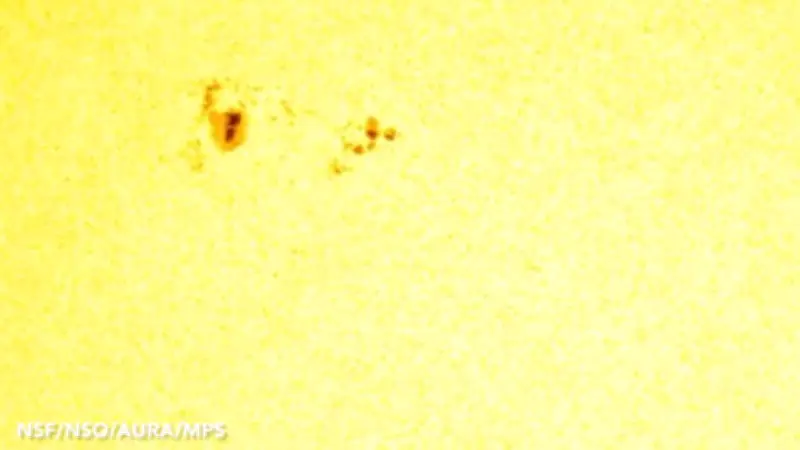
Scientists using the world's most powerful solar telescope have captured stunning new images of the sun's surface with unprecedented detail. The observations, made with the National Science Foundation's Daniel K Inouye Solar Telescope on Maui, Hawaii, reveal features never before seen at such resolution.
Unexpected Discovery
The images were originally taken to test the telescope's limits, but researchers soon realized they had photographed the sun's bright outer shell at higher resolution than ever before. Video footage shows strange, feathery patterns rippling across the surface, along with 'whirlpools' of activity that have never been observed.
These ripples are caused by bits of magnetised plasma moving past each other at different speeds, similar to waves stirred by wind over water. While this phenomenon, known as Kelvin-Helmholtz instability, has been seen on Earth and planets like Jupiter and Saturn, it has never been observed at this level on the solar surface, according to study co-author Friedrich Woger of the National Solar Observatory.

Implications for Space Weather
The findings, published in the journal Nature, could help scientists better understand and forecast coronal mass ejections - massive bursts of energy that can trigger solar storms on Earth, disrupting GPS and creating auroras. "To better understand and eventually forecast the Sun's most disruptive behaviours, we first have to understand the tiny physical processes that drive it," Woger said. "The more of these pieces we find, and in greater detail thanks to powerful tools like the NSF Inouye Solar Telescope, the clearer and more complete our understanding becomes."