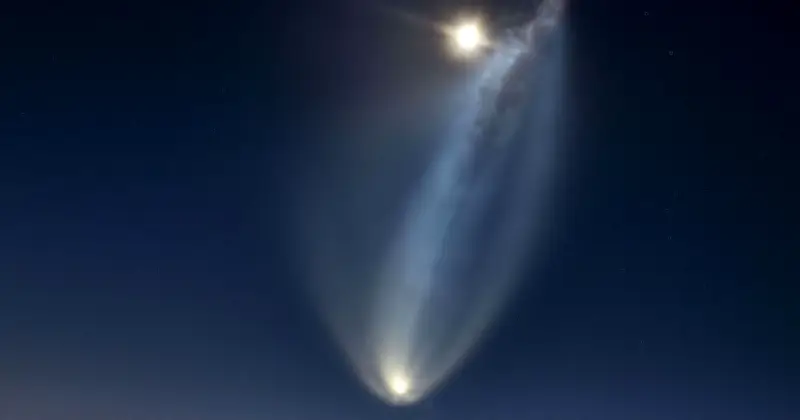
A discarded SpaceX Falcon 9 rocket is set to crash into the Moon today, with the aftermath likely to be visible from Earth with the naked eye. The opportunity to study the crash has astrophysicists intrigued, with the SpaceX bungle actually providing a benefit to study the effects of a moon crash-course and the corresponding aftermath in real time.
Rare opportunity for scientists
The moon gets smacked into by random bits of space junk all the time, of course, as it lacks an atmosphere to protect it. But those projectiles are random and unpredictable, so today's crash will offer up a rare opportunity for scientists to watch the impact closely and in real time.
When and how the crash will happen
The spacecraft is on course to hit the lunar surface on Wednesday (August 5), at around 7.28am BST. When it does strike, it will hit at a speed of about 5,400mph and with the force of three tons of TNT. The explosion will leave behind a hole in the lunar surface and send Moon chunks flying.

While scientists are excited at the chance to study all that moon dust and rubble - it may tell us more about the composition and nature of the Moon - other experts have warned the crash serves as a reminder that we are filling space above us with debris and other spacecraft that may become increasingly dangerous projectiles that may, one day, cause significant damage.
Visibility and aftermath
Today's crash will happen near the Moon's Einstein Crater, on its western edge. It will trigger an explosive flash, which is unlikely to be visible from Earth with the naked eye. With a telescope, however, you're likely to have more luck. The aftermath is likely to be visible from Earth, however, with the crash likely to throw up a trail of dust and debris that should linger for tens of minutes because of the relative lack of gravity and wind to pull it around or blow it away.
After the crash, it will leave behind a crater roughly 27 metres across and about five metres deep. That is not large enough to be seen from Earth, but can be examined with spacecraft.
Background and previous incidents
The SpaceX rocket carried two lunar landers and scientific instruments to the Moon in January 2025. It was not intended to crash into the surface, but it will as SpaceX has been unable to stop it from smashing into the lunar surface.
Today's crash will mark the second time that a dead rocket has crashed into the Moon by accident. A piece of a Chinese spacecraft left behind two craters on the dark side of the moon back in 2022, which Earth was unable to observe due to the location of impact.
Today's crash, however, is likely to provide invaluable data as another space race begins - this time, to actually put man on the moon, to build and live there, instead of merely walking across the lunar surface.