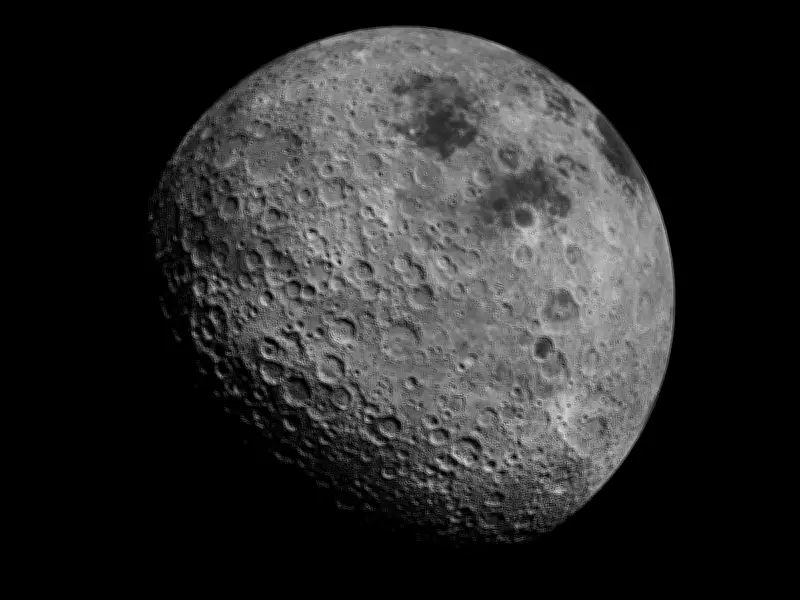
A SpaceX Falcon 9 rocket upper stage has crashed into the Moon at approximately 5,400mph, about seven times the speed of sound. The impact occurred at around 7.35am UK time, with the piece of the rocket being roughly the size of a five-storey building and weighing about 4,000kg on Earth.
Mission Background
The now-abandoned spacecraft was part of a US-Japanese mission launched by SpaceX in January 2025, which carried two lunar landers to the Moon. The rocket stage was left in a 'chaotic' lunar orbit after the mission, and scientists had been tracking its trajectory.
The crash is expected to be confirmed by telescopes in the Americas monitoring the event. Dust and debris from the impact are predicted to rise several miles above the Moon's surface, potentially visible through telescopes from Earth.

Scientific Observations
Astronomer Bill Gray commented on the collision: "Maybe we'll see the flash. Maybe we'll see rocks ejected from the crater. Maybe we'll even see both." Observers in the eastern US and Canada, along with much of South America, are expected to have the best chance of spotting the impact flash.
This marks the second spacecraft to crash into the Moon, following a Chinese rocket segment that created two craters on the Moon's far side in 2022. Los Alamos National Laboratory's Benjamin Fernando noted: "Part of the reason for our interest in this event is to figure out how much of a hazard debris impacts pose to future astronauts."
Impact and Future Concerns
Fernando expects the impact to create a crater about 90ft across and 16ft deep, too small to be seen from Earth but visible to spacecraft. Retired astrophysicist Jonathan McDowell said "this impact will not be a problem", but warned that similar impacts "would be an issue", particularly "in a future where there are long-term bases on the Moon". He added: "We need not to leave rocket stages in chaotic orbits of this kind."