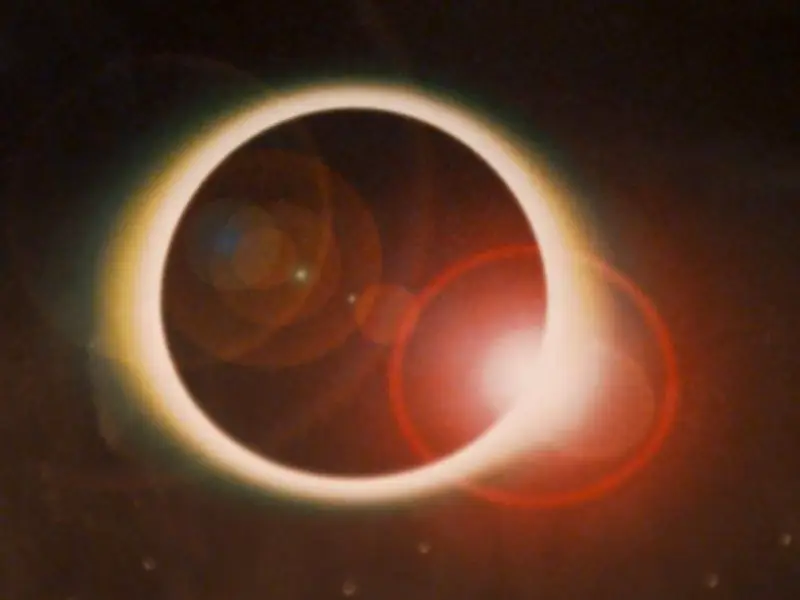
The UK is set to experience its most dramatic solar eclipse since 1999 on the evening of August 12, with the Moon covering between 90 and 96 per cent of the Sun. In Scotland, the partial eclipse will be visible from late afternoon until early evening.
Exact times for Scotland
According to the Royal Greenwich Observatory, first contact - when the Moon begins to obscure part of the Sun - will take place at 6.08pm in Edinburgh and Glasgow. The eclipse will then deepen until it reaches its peak at 7.05pm, when around 90 per cent of the Sun is covered. At that moment, daylight and temperature will drop noticeably, creating an effect similar to twilight or dawn.
The eclipse is due to end in Scotland at 8.00pm, almost two hours after it began. Observers in parts of Greenland, Iceland and northern Spain will see a total eclipse.

How to watch safely
Although the Sun will look dimmer than usual, experts warn against looking directly at it. The reduced brightness can suppress the natural urge to look away, allowing harmful rays to reach and damage the retina - often without any immediate pain. Following the 1999 solar eclipse, around 70 people reported sight problems, and about 40 per cent of those had stared at the Sun for under a minute, according to the Royal College of Ophthalmologists.
Standard sunglasses do not provide enough protection and can actually be more dangerous, as they make it feel more comfortable to keep looking at the Sun for longer, increasing the exposure of the retina to harmful radiation. The safest options are specialist eclipse glasses or handheld solar viewers bought from trusted retailers, with caution advised over online products that may not meet safety standards.
Alternative methods include a homemade pinhole viewer, observing the Sun through a colander, or projecting the Sun's image onto paper using a simple pinhole projector.
Solar and lunar eclipses
Both solar and lunar eclipses occur during an eclipse season, a period of 31 to 37 days that happens twice a year. When a new Moon appears during this window, its shadow can fall on Earth, producing a solar eclipse; when a full Moon appears, it can pass through Earth's shadow, creating a lunar eclipse.
However, the Moon's orbit is tilted about five degrees relative to Earth, so most new and full Moons miss perfect alignment. Only when the geometry lines up during an eclipse season do eclipses take place, with a solar eclipse often followed by a lunar eclipse about two weeks later.
Lunar eclipse times
A partial lunar eclipse will follow on the morning of Friday, August 28. It begins at 3.33am and reaches its maximum at 5.12am, when 90 per cent of the Moon is in Earth's shadow. The Moon will then set and become invisible at around 6.15am.
Because the Moon will be low on the horizon near sunrise, an elevated spot with an unobstructed view towards the southwest will give the best view. As the eclipse nears its peak, the Moon will take on a deep red hue, a result of Earth's atmosphere scattering blue light and leaving only red light to illuminate the Moon.