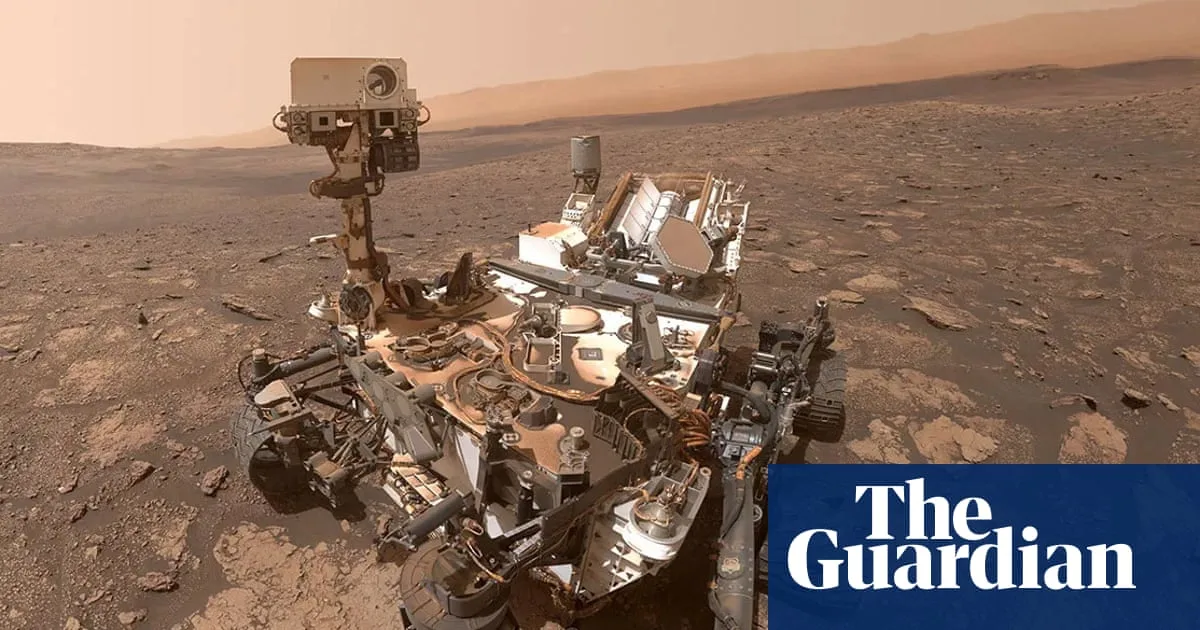
Nasa's Curiosity rover has detected organic molecules on Mars, including chemicals widely regarded as building blocks for the origin of life on Earth. Five of the seven molecules identified in a dried lakebed near the equator had never before been observed on the red planet.
The analysis cannot determine whether the organic compounds are linked to ancient life, delivered by meteorites, or formed through geological processes. However, the finding suggests that if microbial life once existed on Mars, chemical fingerprints could remain preserved today.
“We think we’re looking at organic matter that’s been preserved on Mars for 3.5bn years,” said Professor Amy Williams, an astrogeologist at the University of Florida and a Curiosity mission scientist. “Is it life? We can’t tell, based on this information.”

The rover identified benzothiophene, a sulphurous chemical often delivered by meteorites, and hinted at a nitrogen-bearing compound structurally similar to precursors to DNA. “It is definitely a building block to how DNA is made now. But it is truly just the bricks, not the house,” Professor Williams added.
The findings boost hopes that the European Space Agency's delayed Rosalind Franklin mission, scheduled for launch in 2028, could provide more detailed evidence. That rover will drill to a depth of two metres and perform sophisticated tests to assess the origin of such compounds.