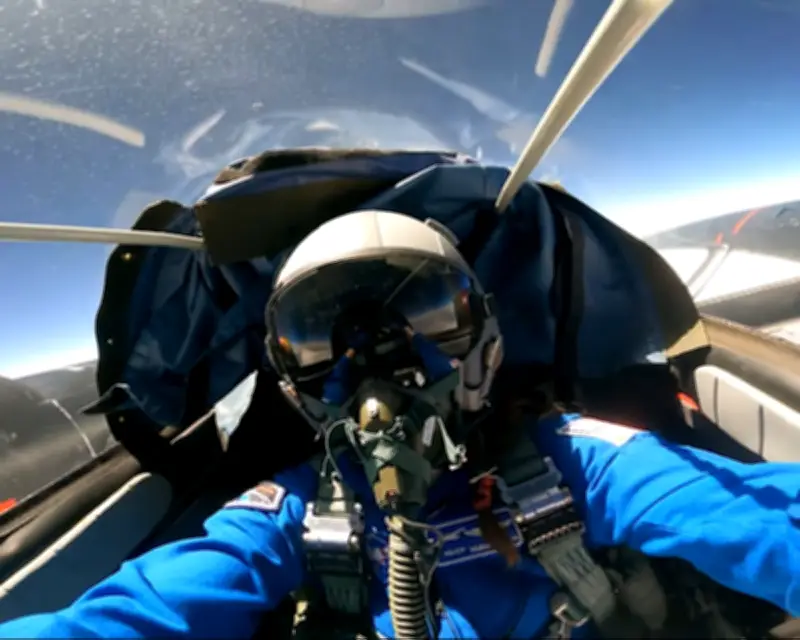
Two Nasa aviators are set to embark on a unique mission this Wednesday, flying a research plane from Iceland to capture rare data during a total solar eclipse. The aircraft, a WB-57, will take off from Keflavik airport and follow the eclipse's path at an altitude of 50,000 feet, aiming to extend the period of totality and observe the sun's outer atmosphere.
Chasing the Eclipse
The mission involves flying along the eclipse's path at 460 mph, allowing the pilots to prolong totality from 2 minutes 18 seconds to nearly 3 minutes. This extended time will enable the onboard sensors to capture detailed images of the sun's corona and other phenomena.
Cary Klemm, a sensor equipment operator at Nasa's Johnson Space Center, described the experience: "The big difference is that in the cockpit of an aircraft at 50,000 feet, it's very bright in the sun. There are no clouds above you, and then all of a sudden, you're hit with this slam of shadow."

Scientific Instruments
The WB-57's nose cone houses four cameras that will take dozens of pictures per second in different wavelengths. These images will capture prominences and nanoflares, which are only visible when the sun's disc is blocked. Dr Amir Caspi, the principal investigator, expressed excitement: "Solar eclipses give us an opportunity to do science we couldn't do at any other time."
Nanoflares release enormous energy and may explain why the corona is hotter than the sun's surface. Aircraft-based observations are preferred over ground or space-based cameras due to fewer atmospheric interruptions and higher data transmission capabilities.
Historical Precedents
The WB-57, based on the English Electric Canberra bomber, has a storied history. Previous eclipse missions include a 1923 US navy biplane attempt and a 1973 Concorde flight that extended totality to 74 minutes.
Understanding the sun is crucial for predicting space weather, which can impact astronauts, satellites, and Earth's infrastructure. Caspi noted, "Understanding space weather is critical for us as a technological species, and it starts with understanding the processes at the sun."
Beyond science, witnessing an eclipse is a rare experience. Caspi reflected, "What percentage of humanity has ever witnessed a total solar eclipse? It's a fraction of a fraction of a per cent. If you're part of that rare group, you're connected to the Earth and the sun and the solar system. It's mind-blowing."