Astronomers have for the first time pinpointed the origin of a fast radio burst (FRB) – a fleeting, high-energy signal from space. The international team used the Arecibo radio telescope in Puerto Rico, alongside facilities in Mexico and Europe, to trace the burst to a small galaxy 2.5 billion light years away.
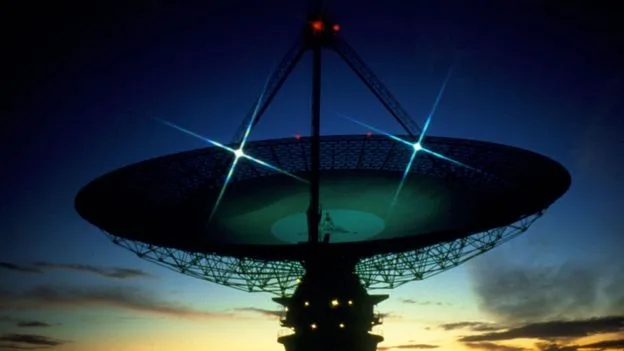
FRBs were first detected in 2007 using the Parkes telescope in Australia. Since then, over 20 bursts have been recorded, each releasing as much energy in a fraction of a second as millions of stars. Their source remains unknown, making them one of astronomy's hottest mysteries.
Keith Bannister, an astronomer at CSIRO in Sydney, described a recent exceptionally bright burst detected by his team: 'This one almost punched our eyes out... it was so bright.' The intensity allowed them to study the magnetic field and material between galaxies by measuring the burst's interaction with electrons along its path.

Despite these advances, the fundamental question persists: what causes FRBs? Theories range from 'blitzars' – high-energy pulsars consumed by black holes – to colliding neutron stars or even defects in spacetime called cosmic strings. Some have speculated about alien signals, though no evidence supports this.
Maxim Lyutikov of Purdue University noted, 'It may turn out to be something simple... but indeed it may turn out to be a window into new physics.' The answer could revolutionise our understanding of the Universe.