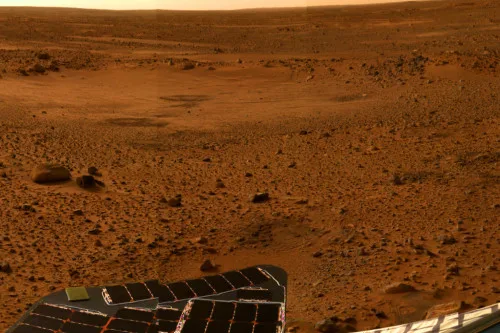
A new study suggests that moisture trapped in the thin atmosphere of Mars could be used as a backup water supply for future human missions to the Red Planet. While buried ice remains the most promising long-term source, atmospheric water harvesting may prove vital where ice deposits are inaccessible.
Dr Vassilis Inglezakis of the University of Strathclyde led the research, published in the journal Advances in Space Research. The paper compares technologies for extracting water from underground ice, soil moisture and atmospheric vapour, assessing their feasibility for human explorers. 'Reliable access to water would be essential for human survival on Mars, not only for drinking but also for producing oxygen and fuel,' Dr Inglezakis said.
The study identifies subsurface ice as the most dependable source for long-term settlement, but notes that accessible deposits are unlikely to lie near planned landing sites. Reaching them would require extensive drilling and heavy machinery. Atmospheric harvesting, while requiring substantial power to capture and condense vapour in the extremely dry Martian air, could serve as an emergency reserve or supplement where ice cannot be reached.

Dr Inglezakis added: 'While the search for water continues and much of Mars remains unexplored, a clear understanding of available technologies and their realistic applications will be key to supporting sustained missions and eventual settlement.' The research emphasises that combining multiple water sources may be the most effective strategy for keeping crews alive and missions self-sufficient.