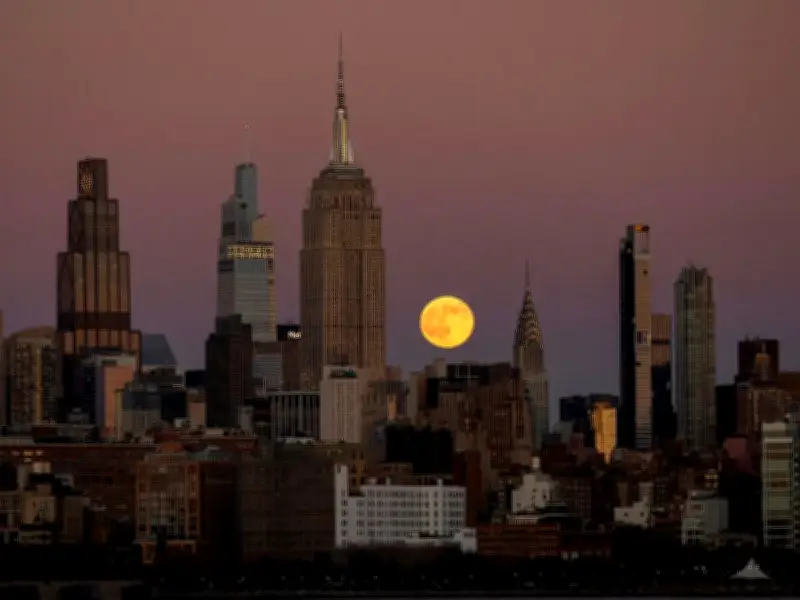
The Beaver Supermoon, the second supermoon of the year, reached its peak yesterday, appearing larger and brighter in skies across the globe. Stargazers worldwide observed the phenomenon, which was visible through the afternoon and evening, with striking images capturing the event in Rome, New York, Toronto, and Penarth Seafront in Wales.
Origin of the Beaver Moon Name
According to Royal Museums Greenwich, there is some disagreement regarding the origin of November's Beaver Moon name. Some claim it comes from Native Americans setting beaver traps during November, while others say the name was set due to beavers' heavy activity of building their winter dams.
Some also call it a Frost Moon, which the Met Office says is due to the chilly conditions associated with this time of year. The forecaster added that this was "not just an ordinary full moon" as it represented the first in a sequence of four consecutive supermoons, with the next phenomena expected in December, January, and February.
Peak Illumination and Viewing
This month's supermoon reached peak illumination at around 3pm GMT, but most across the UK struggled to get a glimpse of it due to cloudy conditions. A supermoon happens when a full moon is close to the nearest point to Earth in its orbit, making it appear larger and brighter.
At its peak, a supermoon can appear around 14 per cent bigger and 30 per cent brighter than a normal full moon. There are usually three or four supermoons occurring over a year, often one after the other.