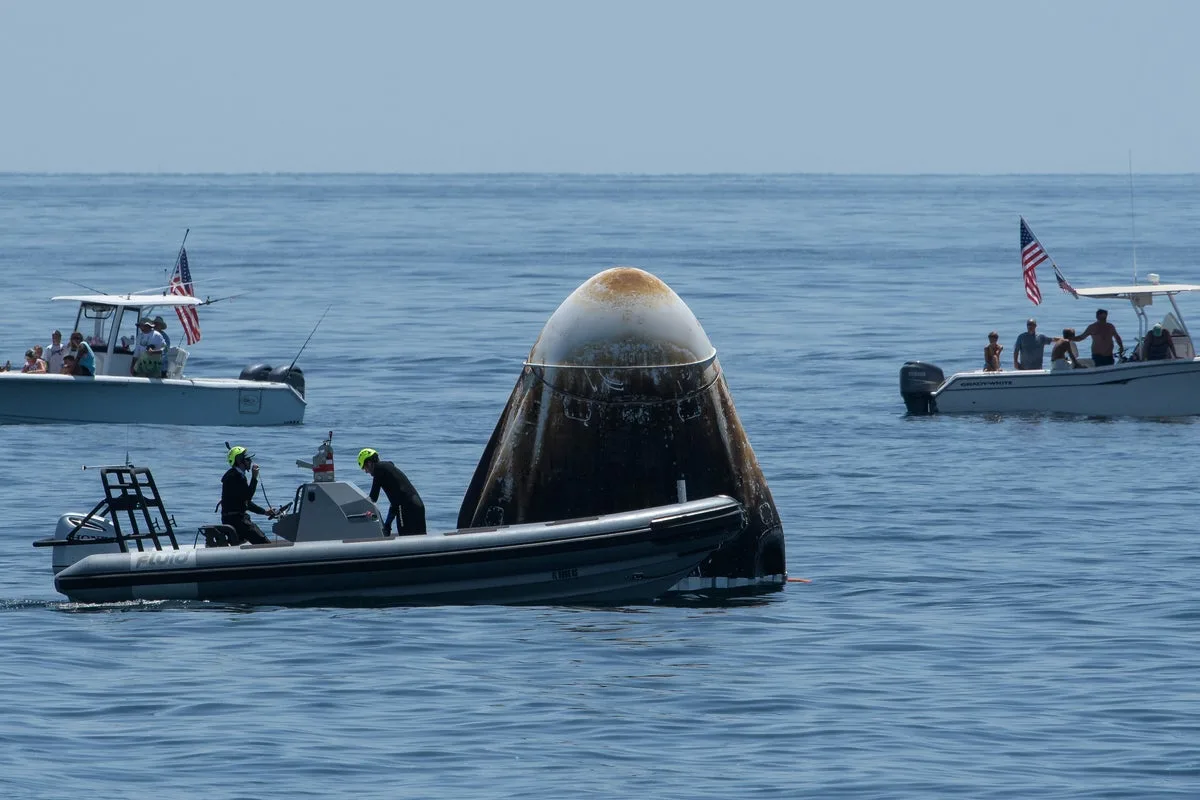
NASA's Artemis II mission, a lunar flyby, will conclude with a splashdown in the ocean on April 10, 2026. The Orion spacecraft will endure extreme conditions, including speeds exceeding the speed of sound and temperatures reaching thousands of degrees. Despite the challenges, splashdown remains a proven method for returning astronauts to Earth.
The history of splashdowns includes dramatic moments, such as Gus Grissom's 1961 Liberty Bell 7 mission. After a successful flight, an explosive hatch malfunction caused water to flood the capsule. Grissom escaped just in time, highlighting the risks involved. However, water landing is still preferred due to its shock-absorbing properties.
During reentry, the Orion heat shield will face intense heat, up to 2,700°F (1,500°C). The uncrewed Artemis I mission revealed unexpected damage to the shield, leading engineers to adjust the trajectory for Artemis II. Parachutes will deploy to slow the spacecraft, with drag chutes activating at around 2,300 feet per second (700 m/s).

Water's low viscosity and density make it an ideal landing medium, cushioning the impact. With 70% of Earth's surface covered by water, splashdowns offer a high probability of safe return. NASA's decades of experience ensure that the Artemis II crew will come back safely.