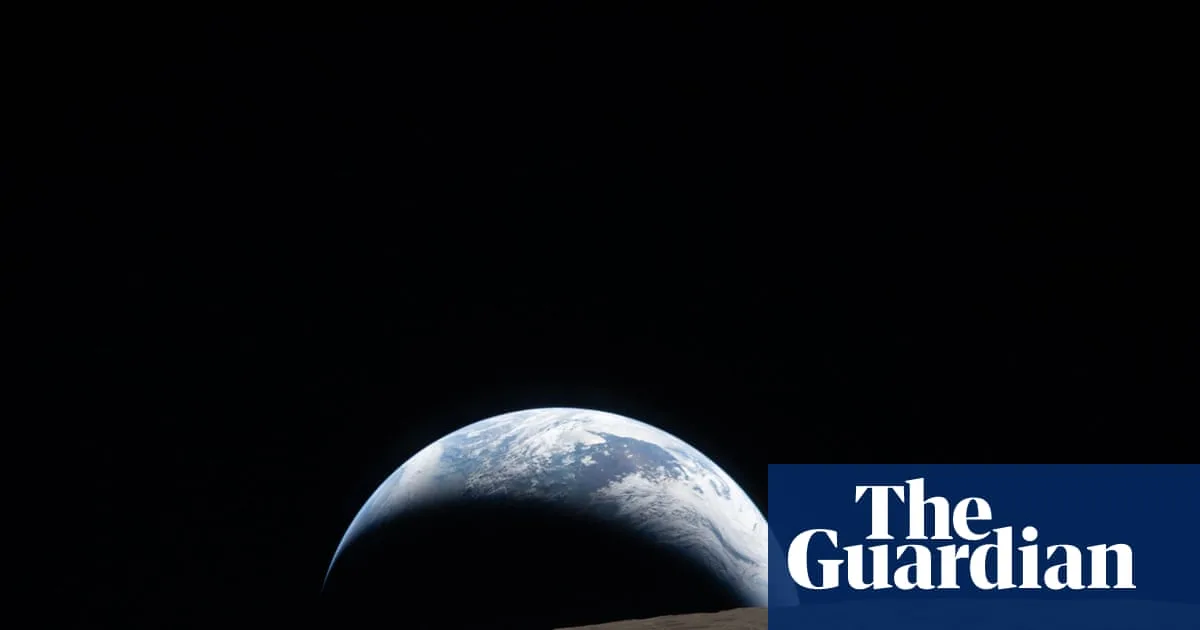
Nasa’s Artemis II astronauts have described the powerful emotions they felt as they soared over the moon, capturing images of impact craters, ridges and the Orientale basin. The crew, consisting of Nasa astronauts Christina Koch, Victor Glover, Reid Wiseman and Canadian Space Agency astronaut Jeremy Hansen, photographed the Earth rising from behind the moon, a solar eclipse, and parts of the 590-mile-wide Orientale basin never before seen with the naked eye.
Koch, the first woman to fly around the moon, said: 'I just had an overwhelming sense of being moved by looking at the moon. It lasted just a second or two and I actually couldn’t even make it happen again, but something just threw me in suddenly to the lunar landscape and it became real.' She noted the brightness of new craters, comparing them to 'pinpricks in a lampshade'. Glover, the first black man to travel beyond low Earth orbit, said: 'It was very moving to look out the window. I went straight where Christina went, and I was walking around down there on the surface.'
During a phone call with US President Donald Trump, Hansen explained the differences between the moon's near and far sides, noting that Earth's gravity has profoundly affected the near side. Glover recounted the 40-minute communication blackout as the crew swung behind the moon, saying he said a prayer but continued recording scientific observations. 'That is actually the time when we were the farthest from Earth and the closest to the moon,' he added.

Wiseman described the eclipse they witnessed, seeing the sun's corona and Mars aligned, and expressed excitement about humanity becoming a 'two-planet species'. On Monday, the crew broke the record for the farthest humans have travelled from Earth, reaching 252,756 miles, surpassing Apollo 13's 1970 record. Their closest approach to the moon was 4,070 miles. The Orion spacecraft began its journey on 1 April from Kennedy Space Center and is now hurtling back towards Earth, with a splashdown off the coast of San Diego scheduled for 8.07pm US Eastern Time on Friday.