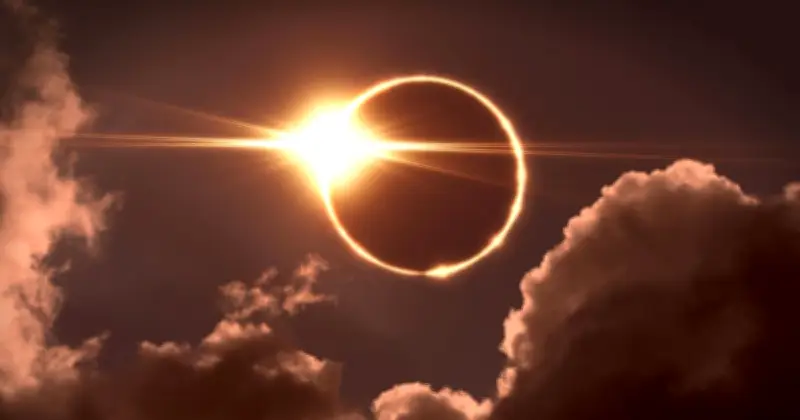
The second-longest total solar eclipse of the 21st century is set to take place next year, giving skywatchers a rare chance to witness more than six minutes of total darkness. The eclipse will occur on August 2, 2027, with totality lasting an extraordinary six minutes and 23 seconds at its longest point, according to NASA.
Eclipse path and affected regions
The phenomenon is expected to impact parts of southern Europe, North Africa and the Middle East, including cities like Cádiz, Tangiers, Benghazi, Luxor and Jeddah. It will be one of the most spectacular astronomical events of the 21st century and is its second-longest eclipse.
Parts of the following countries are within the path of totality: Spain, Morocco, Algeria, Tunisia, Gibraltar, Libya, Sudan, Egypt, Saudi Arabia, Yemen and Somalia.

Long wait for the next long eclipse
But those who miss it will have a very long wait for another eclipse of the same length. The next total solar eclipse to last longer than the 2027 event is not expected until 2114 – meaning neither today's adults nor, in many cases, their children are likely to see another one as long.
During a total solar eclipse, the Moon passes directly between the Earth and the Sun, completely blocking the Sun's bright disc for observers along a narrow path. For those in the path of totality, daylight can briefly turn into darkness as the sky darkens and the Sun's outer atmosphere, known as the corona, becomes visible around the Moon.
Totality duration and visibility
The 2027 eclipse will be particularly notable because of its unusually long period of totality. The maximum duration of six minutes and 23 seconds will only be visible from a specific part of the eclipse's path, while other locations will experience a shorter period of darkness.
For observers outside the path, the Moon will still pass across the Sun, producing a partial solar eclipse, but the dramatic period of complete darkness will not be visible.