Louis Theroux's Netflix Documentary Exposes Manosphere's Dangerous Business Model
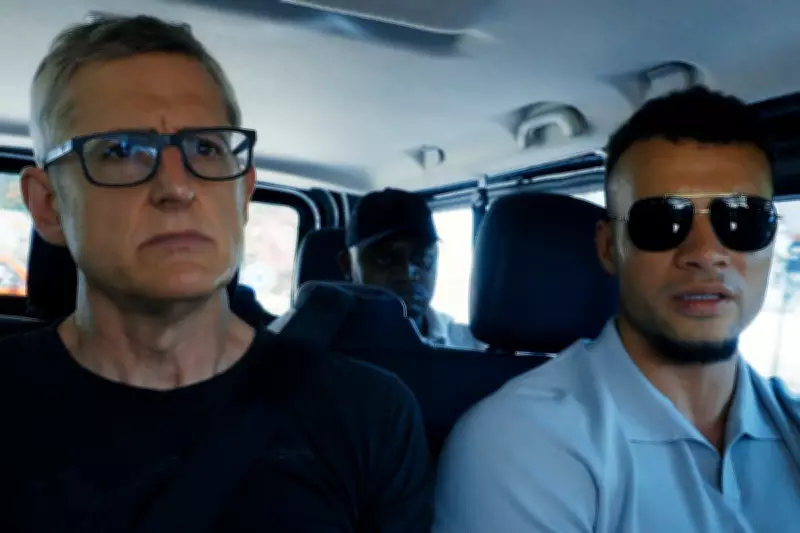
Journalist Louis Theroux attempts to lift the lid on a dangerous online ideology with his new Netflix documentary, Inside the Manosphere. The film, released on Wednesday 11 March 2026, showcases the individuals driving this culture and examines the business models that sustain it.
An Insidious Ideology Exposed
Over the past two years, viral clips, news headlines and television series such as Adolescence have ensured much of the public has encountered the "manosphere" – an online ecosystem that repackages misogyny, anti-feminism and male grievance as self-improvement and hustle culture. Theroux's documentary goes further, tracing not only the rhetoric of "high-value men" but also the livestream formats and financial structures that support this world.
What emerges in Theroux's exposé is not just provocation but a clear misogynistic worldview. Across interviews and through influencers' own content, viewers see the defence of a regressive gender hierarchy and attempts to restore it. Women are described as having innate value through their beauty and sexuality while being dismissed as less rational and emotionally stable. Monogamy is framed as binding for women but optional for men, with gender equality blamed for cultural decline.

At times the language is openly authoritarian. Infamous influencer Myron Gaines describes himself to Theroux as a "dictator" in his romantic relationship, casting intimacy as something he permits and domestic care as something owed to men. Gaines rejects being labelled a misogynist, claiming he loves women but that women don't know what they want and must be led.
Misogyny as a Profit-Driven Enterprise
The documentary reveals striking hypocrisy among manosphere figures. Several influencers, such as Harrison Sullivan, publicly deride women who use platforms like OnlyFans while privately profiting from managing their accounts. More significantly, Theroux shows how this ideology has become a sophisticated business model targeting vulnerable young men.
In one early scene, young boys with blurred faces repeat lines about hating women and gay people with unsettling ease. Later, young adult men speak of having "no value" unless they accumulate wealth, status and dominance. Working a traditional nine-to-five job is framed as submission to the "matrix," while the "hustle" is presented as freedom.
Subscription "academies," private groups and coaching schemes convert insecurity into substantial income. The documentary features American influencer Justin Waller promoting The Real World – an online university run by his close friend and business partner Andrew Tate, who faces charges of rape and human trafficking in multiple countries.
Young men and boys are told they are deficient unless wealthy, muscular and emotionally invulnerable, then charged for access to the mindset said to fix them. The hierarchy that elevates dominant men and denigrates women simultaneously and exploitatively monetises the boys beneath it.
Real-World Consequences and Conspiracy Theories
Running alongside the hustle narrative is a thread of conspiracy theorising. The "matrix" is invoked as a metaphor for societal and institutional systems said to keep men compliant and blind to alternative paths to power. This darkens into talk of shadowy elites engineering cultural decline, including "moral" decline and the erosion of men's place in the world.
Theroux's documentary acknowledges harms to women but could have done more to highlight significant manosphere-inspired effects. Research conducted with colleagues extensively documents how manosphere narratives have permeated schools internationally, resulting in:
- Higher levels of harassment and gender-based violence by some boys against girl peers
- Increased targeting of women teachers
- Erosion of women's workplace safety
- Reduced participation of girls in educational settings
The "manfluencers," notably Sullivan and Gaines, suggest recent political developments – such as the rise of former President Trump – vindicate their worldview. Theroux's instinct is to return to the influencers' accounts of absent fathers and unstable upbringings, tilting the story toward sympathy and trauma as explanation.

However, as the documentary suggests, misogyny does not require trauma to flourish, nor are most boys who experience hardship drawn into sexist worldviews. These ideas are ideological and structural, with long-standing gender hierarchies repackaged and broadcast at scale for financial gain.
Theroux rightly suggests we are all, in some sense, now living inside the manosphere's influence. Understanding what drives the men at its centre matters – as does focusing on the real-world harms they cause through their profitable exploitation of gender anxieties.