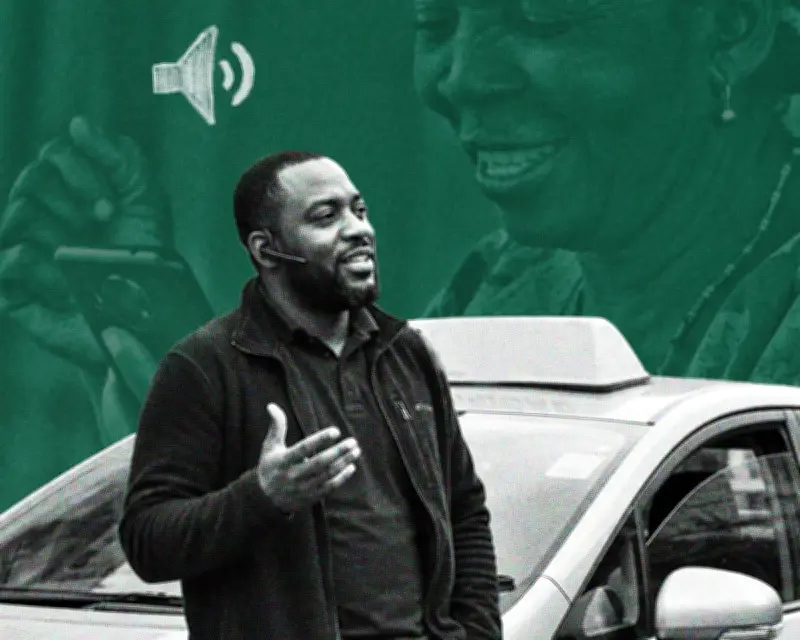
For those employed in arduous solitary work such as cab driving, a marathon phone call is the perfect place to navigate the dislocations of immigrant life. The question of who Uber drivers are always talking to on the phone regularly surfaces on Reddit threads, social media, and even in offices. The bafflement this causes reveals much about the separate worlds we occupy.
The Mystery of the Marathon Call
When you get a cab on a ride-hailing app, the chances that your driver will be on the phone is high. The conversation is almost always quiet, containing pauses so long that it often seems they are actually no longer on a call. But then comes a rejoinder, a laugh, an interjection, and the marathon continues.
For anyone of an immigrant background, the question of who they are talking to is absolutely no mystery. They are talking to siblings, parents, cousins, and friends. Sometimes the person on the end of the line is back home, other times they are in a western city also navigating the dislocations of immigrant life. The long phone call is a regular feature of diaspora lives, and even more so for those employed in long, solitary work such as cab driving. These conversations are about nothing and everything.
What Are They Talking About?
Based on calls constantly fielded from friends and family, and familiar themes from chats with drivers in Arabic, the subjects are remarkably consistent. The range includes family gossip, wedding updates, complaints about the cost of living in the west, advice on navigating complex immigration systems, extremely detailed health updates, and political analysis of whatever crisis is unfolding. These conversations can broadly be sorted into one of two categories: “serious technical resolution of a problem” or “shooting the breeze”.
These marathon phone calls are typically between someone on a long shift, commute, or drive, and a mother cooking in the kitchen. There is a languorous quality to the call. Time and conversational convention shift to accommodate long silences without explanation, as one person or the other breaks away to get on with something. Because the point is not the actual chat. It is a broadly phatic – that is to say language used for bonding – form of communication, an exercise in yearning and homesickness. It helps bridge a gap between long distances and absences, and simulate a proximity that is so deeply longed for.
Why Talk All Through the Working Day?
The interminable phone call is an immigrant’s lifeline, now made cheap and stable by voice over IP. But it is also a feature of broader cultural and economic patterns. Western time is personal, individual, literally “me time”, something that is violated if demanded without permission. This time is parcelled out necessarily for decompression, for work, for leisure. In other cultures, time is social and public.
In Sudan, for example, there is no such thing as calling ahead before a visit. Your home is a drop-in destination from about 11am onwards. A neighbour will pop in for a chat, a relative will be driving home and swing by, and if there are children in the household, their own social lives mean you just never know how many people you are cooking for. The corner shop is a lifeline of last minute provision as numbers swell unexpectedly.
When that physical socialisation is impossible, the phone does the work. Certain conditions make the visit and the call possible. Homes where there is often a homemaker to receive, or work that does not require strict, in-office professional deportment and execution. Highly structured working environments and fast-paced modern lives mean that entire societies are firmly post-casual-phone-call.
But it is also a mindset, which you can lose over time. Many find themselves becoming increasingly post-phone call outside work, constantly thinking to themselves that they will ring a relative back when they have the time. Generally, they prefer to message or voice note, conscious that when they return the call, it absolutely will not be a quick and efficient catch up. Fundamentally, this is an extremely capitalist notion of time as purely a function of work, where even if you are not working, you are “re-charging” in anticipation of more work.
Reclaiming the Lost Art of the Ambling Phone Call
The fact that the long driver call is such a bewildering anomaly is a meeting of those two worlds. In one, a passenger cannot fathom that you might have so much to say to someone over the phone, because everyone you love or want to see is generally within your immediate social reach, and because it is unfathomable to dedicate so much of your precious bandwidth to seemingly aimless conversation. In another, loved ones are in a different country or sprawl all over the world, and without their constant companionship life is just alienation and monotonous work.
But there is more to the lost art of the phone call in certain societies than just the pressures of modernity. In contemporary life, there are so many ways to feel like you are in touch and in conversation when you are not. So many ways to feel part of some slipstream of humanity, when in fact we are scrolling, meme-ing, seeing news from friends and strangers alike via story updates, while not exchanging anything meaningful or even uttering a single word. Those in exile are acutely aware of alienation, and reach out to remedy it. But for those in their home countries, loneliness still lurks in ways harder to recognise. A phone call is honestly less time consuming and more replenishing than anything else we use our devices for.