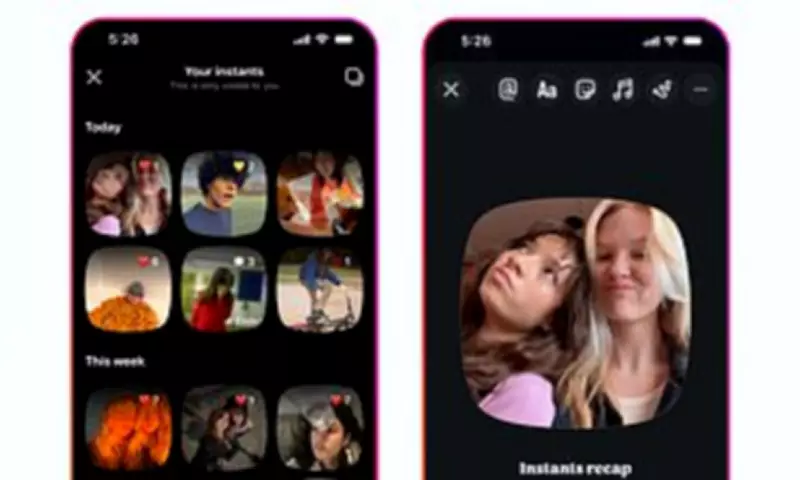
Instagram has faced backlash over its latest feature, Instants, which allows users to share photos that disappear after being viewed. Critics have quickly labeled it a clone of Snapchat's core functionality.
What Is Instants?
Announced via a blog post by Meta, Instants is designed to let users share casual, everyday photos that vanish once friends have seen them. According to Meta, the feature 'makes it easier to share life's moments with friends as they happen.' However, the reception on social media has been overwhelmingly negative.
User Reactions
On X (formerly Twitter), one user wrote: 'Instagram took 15 years to copy Snapchat's first feature.' Another commented: 'Can one social media platform not try and be every single other one.' Some users were caught off guard by the instant nature of the tool. One admitted: 'tried to use the new ig instant feature and accidentally posted a picture of me on the toilet.' Others expressed concerns about privacy, with one user stating: 'What the f*** are those instants on Instagram and why didn't anyone tell me that EVERYONE can see that.' Another vented: 'Instagram trash instants immediately. I had no idea tf they were and it opened up my camera and got me NAKED. Y'all gonna ruin someone's life.'

How Instants Works
The feature is accessible from the Instagram inbox, where a mini stack of photos appears in the bottom right corner. Tapping the white button captures a photo, which is then shared instantly with selected friends—either Close Friends or mutual followers. An undo button appears momentarily, but disappears quickly. Friends can react, reply, and share photos in response, but can only view each shot once.
How to Turn Off Instants
For those who wish to disable the feature, Instagram provides a simple method. Users can open their profile, tap the three lines in the top right corner, select 'Content Preferences', and toggle on 'Hide instants in your inbox.' Instagram assures that existing controls like block, mute, and restrict apply to Instants, allowing users to limit who can send them.