US Law Mandates Drunk Driving Detection Tech in New Cars, But Implementation Stalls
A federal law requiring all new vehicles sold in the United States to incorporate technology capable of detecting drunk or impaired driving has survived a recent attempt to strip its funding. However, the implementation of this landmark legislation remains stalled as regulators continue to assess whether the necessary technology is sufficiently developed and reliable for widespread deployment.
A Personal Tragedy Fuels Legislative Action
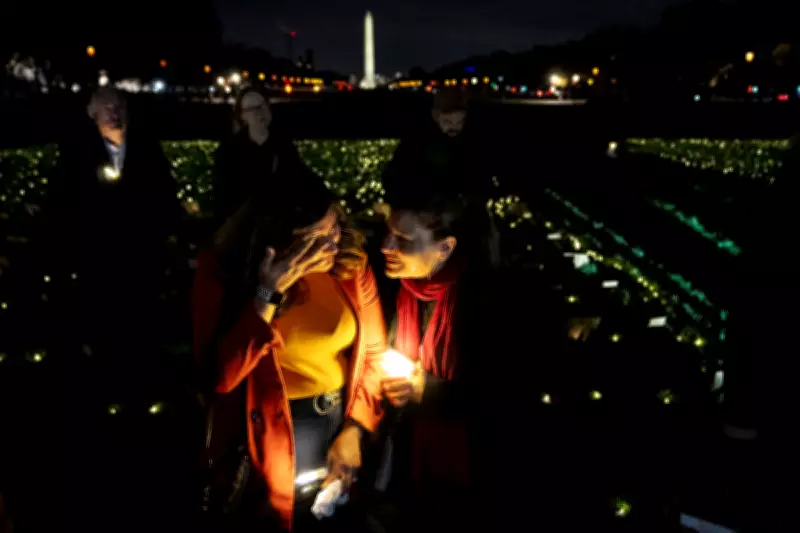
The push for this safety measure was profoundly influenced by personal tragedy. Rana Abbas Taylor lost her sister, brother-in-law, nephew, and two nieces in January 2019 when a driver with a blood-alcohol level nearly four times the legal limit crashed into their car in Lexington, Kentucky. The Michigan family was returning home from a Florida vacation. This devastating event transformed Abbas Taylor into a vocal advocate for combating the more than 10,000 alcohol-related fatalities that occur annually on American roads.
Her advocacy helped shape the Honoring Abbas Family Legacy to Terminate Drunk Driving Act, commonly known as the Halt Drunk Driving Act. This measure was attached to the $1 trillion infrastructure law signed by then-President Joe Biden in 2021. The legislation anticipated that, potentially as early as this year, automakers would be mandated to roll out "passive" technology to detect driver impairment and prevent the vehicle from operating.

Technological Options and Regulatory Delays
Regulators have a range of technological options to consider for meeting the law's requirements. These include:
- Air monitors that sample the vehicle's interior for alcohol traces.
- Fingertip readers that measure a driver's blood-alcohol content.
- Scanners that detect signs of impairment through eye or head movements.
Mothers Against Drunk Driving hailed the Halt Act as the most significant piece of legislation in its 45-year history. Despite this, implementation has been bogged down by regulatory delays, with no clear indication that final approval is imminent. The National Highway Traffic Safety Administration, tasked with establishing the implementation rules, stated it is still "assessing developing technologies for potential deployment" and expects to report to Congress soon. Supporters predict the agency may push a final decision into 2027, after which automakers would have an additional two to three years to install the systems.
"The way we measure time is not by days or months or years. It's by number of lives lost," Abbas Taylor told The Associated Press. "So when we hear manufacturers say, 'We need more time,' or 'The tech is not ready,' or 'We're not there yet,' all we hear is, 'More people need to die before we're willing to fix this.'"
The 'Kill Switch' Debate and Industry Opposition
A significant portion of the opposition has centered on claims that the law would force manufacturers to install a so-called "kill switch" in vehicles. Critics argue this could allow for government control over private automobiles. Florida Governor Ron DeSantis, commenting on social media, drew comparisons to George Orwell's dystopian novel "1984," suggesting such technology would enable vehicles to "be controlled by the government."
A Republican-led effort to remove the Halt Act's funding was defeated in the U.S. House of Representatives last month by a vote of 268-164. Another bill seeking to repeal the act entirely awaits a committee vote.
The alcohol industry has strongly defended the law against these arguments. Chris Swonger, president and CEO of the Distilled Spirits Council of the United States, emphasized that the legislation specifically requires passive technology, akin to existing safety mandates like seat belts and airbags. "There is no switch, there's no government control, there is no sharing of data," Swonger stated. "That's just an unfortunate scare tactic."

However, critics like Representative Thomas Massie, a Kentucky Republican who authored the defunding effort, remain unconvinced. He argued that even a dashboard system acting autonomously could serve as "your judge, your jury, and your executioner." Massie cited a hypothetical scenario where a mother swerves in a snowstorm to avoid hitting a neighbor's pet, only for her car to deactivate itself after falsely determining she is impaired.
Technical Reliability and Future Prospects
The Alliance for Automotive Innovation, a major trade association for U.S. automakers, has expressed concerns about the technology's readiness. In a 2024 submission to regulators, the Alliance argued that substantially more research is needed before mandating such systems. They warned that even a low false-positive rate could result in thousands of unimpaired drivers being prevented from operating their vehicles each day.
In a positive development for the technology's proponents, the Insurance Institute for Highway Safety recently announced that impairment detection and other technology aimed at curbing risky driving behavior will soon be included as criteria for a vehicle to earn one of its top safety awards. This move by the IIHS, a research arm funded by auto insurers, vouches for the potential reliability and importance of such systems.
Stephanie Manning, chief government affairs officer at MADD, pushed back against the narrative that the technology does not exist. "We've seen many different types of technology that can solve drunk driving. We just haven't seen it deployed and implemented the way that we would like," she said.
It is important to note that the system ultimately chosen under the Halt Act is intended to detect impairment beyond just alcohol consumption, addressing a broader range of risky behaviors. Many states already require breath-activated ignition interlock systems for convicted DUI offenders, but the federal law aims for a more comprehensive, preventative approach.
To accelerate progress, one bill advancing in Congress would offer a $45 million prize to the first entity that can produce and deploy a consumer-ready piece of impairment-detection technology. For advocates like Rana Abbas Taylor, such efforts provide a measure of hope. "When you've lost everything, there is nothing that will stop you from fighting for what is right," she said. "But we see the writing on the wall, and we know it's only a matter of time before this happens."