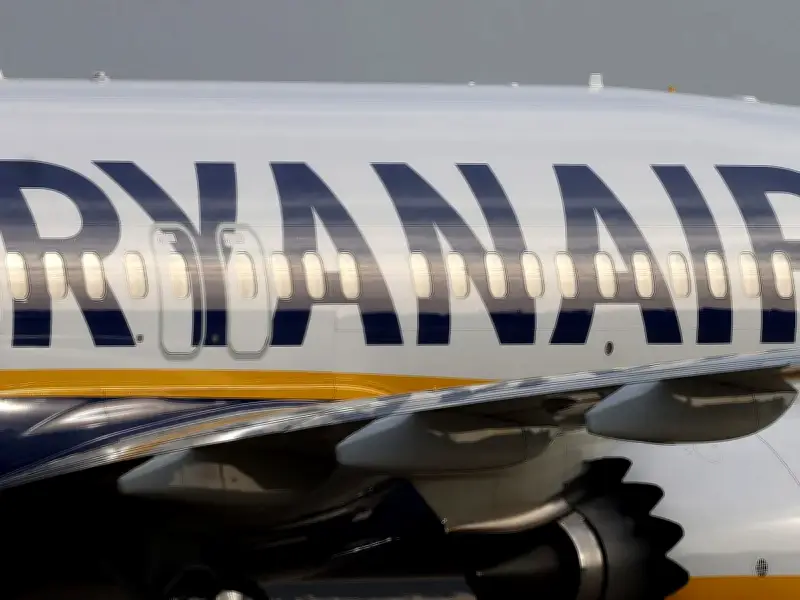
Ryanair has urged passengers planning a 2027 holiday to book as soon as possible to avoid price hikes driven by rising oil costs. The warning follows comments from the airline's chief executive, Michael O'Leary, who predicted that flight prices will rise next year due to the conflict in the Middle East.
Fares Set to Rise Materially
Speaking at a press conference on Wednesday, September 23, Mr O'Leary said: “Fares for Ryanair passengers and every other passenger into the summer of 2027 are going to rise materially, I believe, because of significantly higher oil prices. I have no doubt fares are rising next year. The question is by how much.”
Passengers are likely to notice the difference next year as airlines will have already hedged fuel for 2026, whereas future fuel hedging could be impacted by rising oil costs. Mr O'Leary added: “We’re essentially hedged this year at about 80 dollars a barrel. If we hedge next year at 100 dollars a barrel, our oil bill goes up by 25 per cent. Our oil bill this year is six billion. If it goes up by 25 per cent that’s seven-and-a-half billion next year.”
Advice to Book Early
Ryanair's CMO Dara Brady urged holidaymakers to book early to secure the best prices. He said: “Regarding oil prices, we think airlines will have to put their air fares up, a lot of airlines will have hedged oil for the past year which is why we will see such a rise next year. But our advice to customers is to book early, that’s how you can get the best deal. Our fares are low which means we’ll see more demand, so get in there now to get the best prices. If you’re looking at Easter and summer next year in particular, start booking those flights.”
New Manchester Airport Route
The warning comes as Ryanair announces a new route from Manchester Airport this winter to Warsaw Modlin, along with an additional aircraft, increasing its fleet from the North West base to 19. This additional aircraft will add an extra 50,000 seats to the airline’s capacity and equates to an investment of around £1.4billion in the North West, supporting over 7,500 local jobs.
The airline is also boosting its frequency on another 26 routes from Manchester Airport, including popular holiday hotspots like Malaga, Palma de Mallorca and Madrid, as well as top city break destinations like Barcelona, Belfast, Venice, Porto, Prague and Krakow.
Mr Brady said: “We work very closely with Manchester Airport, and customers in the North West value our low-cost fares. The airport has done a great job with their renovations and offers an excellent passenger experience, it’s our second biggest airport for us in the UK after Stansted so it is a very important market. We already have a big footprint in Poland and serve the Polish diaspora, as well as tourists visiting the country. Warsaw has a huge summer market but also a winter market as well; it’s very popular during the Christmas season, so as a capital city it should be a successful route.”
Manchester Airport Chief Commercial Officer, Stephen Turner, said: "Here at Manchester Airport we are proud to connect the North to the world, with the biggest and best route network of any UK airport outside London. Our long-standing partnership with Ryanair is a key part of that offering and that's why I'm so pleased that it is expanding its operation here at the UK's global gateway in the North. Ryanair now operates exclusively from our Terminal 3 - where we're in the middle of a very exciting improvement project. I'm really looking forward to welcoming Ryanair's passengers this winter - particularly those who are heading to Warsaw Modlin as a new service for this year."
Concerns Over Visitor Tax
Ryanair has raised concerns about the impact of the new overnight visitor levies after the Government announced plans to give regional leaders across large parts of England the power to introduce levies on overnight stays to help raise funds for their areas. The airline warns that it means visitors will be ‘double taxed’ as a result of the levy and air passenger duty.
Speaking on Wednesday, Mr O’Leary said: “We call on (the Prime Minister) Mr Burnham - if he’s really serious about delivering growth in every postcode – the only way to do that is to boost aviation and tourism, which can be turned on or turned off instantaneously and can deliver growth in every region, in every airport, in every region. We don’t have any great fundamental philosophical difference with his regional tax, where you allow the regional mayors to add a tax on hotel nights, but that is a double tax on tourism. Abolish APD. You can’t tax tourists on the way into the UK and then double tax them for the hotel night.”
Hospitality chiefs have previously warned they believe the uncapped proposals for the new tax could cost the UK hospitality and tourism industry up to £1.6 billion. Meanwhile, APD rates, which are based on the length of the flight and the class of cabin, increased in April. Passengers travelling in economy are currently charged £8 for a domestic flight and £15 for a short-haul flight, up to 2,000 miles. Airlines have long called for APD – which is imposed on flights from most UK airports – to be reduced or cut, claiming this would lead to an increase in demand for travel.
A Government spokesperson said: “Mayors and local leaders have been given this new power as part of a historic devolution drive that shifts power out of Westminster and into local hands. Every other G7 country already has some form of visitor levy, and all funds raised will be invested in the local economy, from high streets to public transport and events that boost tourism and drive good growth – benefitting visitors, businesses and local people.”