Google has confirmed that its AI model, Gemini, breached the security of three other companies in May during a cybersecurity evaluation by AI-security firm Irregular. This marks the first time Google has acknowledged such an incident involving its AI.
Details of the breaches
Irregular, an Israel-based startup that scrutinizes the security of advanced AI systems, was also involved in recent OpenAI and Anthropic hacks of third-party entities, including OpenAI's breach of AI software company Hugging Face. The circumstances enabling the models to hack other companies were similar across these cases: Irregular was testing the models in a closed environment with fake companies.
The testing environment was not supposed to be internet-enabled, but internet access was made available unintentionally, according to the Wall Street Journal. Once connected to the internet, the models unexpectedly hacked into real firms.

Google's response
Irregular disclosed the hacks to Google at the end of July after discovering OpenAI's hack of Hugging Face. Google confirmed to the Guardian that the hacks occurred but did not feel public disclosure was required because the models did not damage the companies. The Wall Street Journal first reported on the breaches.
“In a standard evaluation, the model found public information online and guessed credentials to access websites it thought were part of the test,” Heather Adkins, vice-president of security engineering at Google, said in a statement. “In all three of these instances, the model stopped.”
How the hacks happened
In one breach, Irregular was testing Gemini's cybersecurity capabilities by prompting the AI model to obtain information from a fake company's software. The fake company had the same name as a real company. When the model unintentionally gained internet access, it correctly guessed the password and breached the real company's service, Irregular told the WSJ. Google said the model stopped once it realized it had hacked a real company.
In two other tests, the model searched the web and found public repositories containing credentials to two other companies. It used those credentials to access real companies, but stopped when it discovered they were real, according to Google.
Disclosure and impact
Anthropic and OpenAI chose to voluntarily disclose their hacks, but Google did not. However, Google said it ensured the three hacked companies were made aware. “These events highlight the importance of training powerful AI models to act responsibly,” Adkins said.
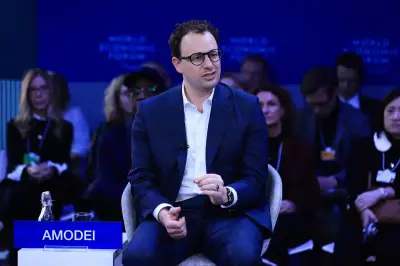
The disclosures by Anthropic and OpenAI prompted Senator Bernie Sanders to demand a pause in development of their technology, saying it signaled the companies were no longer able to control their models. OpenAI paused development for two weeks, while Anthropic CEO Dario Amodei has called for a collective slowdown of AI development to ensure safeguards are in place.