FBI Recovers Nest Camera Footage in Missing Woman Investigation
Footage released of a potential suspect in the disappearance of Nancy Guthrie has raised fresh and urgent concerns about how much data smart home devices collect and store, even without user subscriptions. FBI Director Kash Patel stated on Tuesday that investigators recovered doorbell camera footage from Savannah Guthrie's 84-year-old mother by accessing residual data stored on backend servers, a revelation that has prompted widespread questions about digital privacy.
Details of the Disappearance and Recovered Evidence
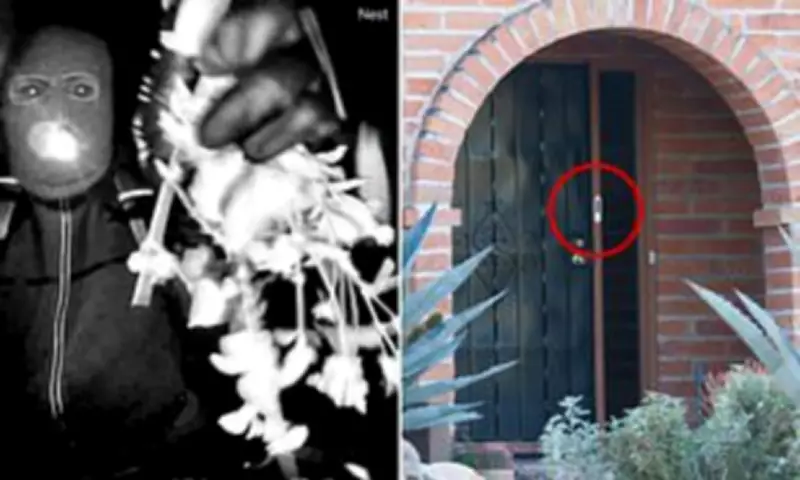
Nancy Guthrie has been missing for more than a week, with her last known sighting at her home in the Catalina Foothills neighborhood of Tucson, Arizona, on January 31. The black-and-white video, recovered by authorities, shows a masked figure wearing gloves tampering with a Google Nest doorbell camera outside her $1 million home in Tucson on the morning she vanished. Pima County Sheriff Chris Nanos had previously indicated no footage was available because Guthrie did not have a subscription to Google's video storage service, which typically keeps recorded clips in the cloud.
The individual at Nancy Guthrie's door is seen staring directly into the lens while holding plants ripped from outside the Arizona home, seemingly to cover the Nest doorbell camera on February 1. A subsequent video released by officials depicted the suspect attempting to cover the lens with a clenched fist, then searching the area around the door, ripping a bunch of flowers from the entranceway, and waving them at the camera. Another clip shared by the FBI showed the individual hunched over as they made their first approach to the door, bowing their head. The doorbell camera is now missing from the Tucson home in the wake of Nancy's disappearance.

Privacy Implications and Expert Reactions
Michelle Dahl, the executive director at the Surveillance Technology Oversight Project, expressed alarm in a statement: 'We should absolutely be alarmed over the privacy implications that are at stake with this video that was recovered by the Nest camera. I think the public has gotten too comfortable with surveillance cameras in not only public spaces, but also their private homes, without thinking about the consequences of where that data ends up.'
Because Nancy did not have a Nest subscription, it took investigators days to extract the footage. Sharing video and pictures of the suspect on Nancy's door, Patel wrote on X: 'Over the last eight days, the FBI and Pima County Sheriff's Department have been working closely with our private sector partners to continue to recover any images or video footage from Nancy Guthrie's home that may have been lost, corrupted, or inaccessible due to a variety of factors - including the removal of recording devices. The video was recovered from residual data located in backend systems.'
How Nest Cameras Operate Without Subscriptions
To understand what likely happened, it helps to know how Google's Nest cameras operate, as they work differently from most security cameras. Many doorbell cameras only store footage if the user pays for a cloud subscription or uses local storage, such as a memory card or home hub. Nick Barreiro, a digital forensics specialist, explained to The Verge: 'With most systems, deleting something doesn't mean it disappears immediately.'
Nest cameras, however, can upload video clips to Google's servers even without a paid subscription. Google provides a small amount of free cloud storage: older Nest models store clips of up to five minutes for three hours, while newer models store 10-second clips for up to six hours. That means some footage is temporarily stored online regardless of whether the user pays. Unlike many competitors, Nest does not offer local storage that users can directly access. Newer models include limited on-device backup storage, but it can only be accessed through Google's cloud system. As a result, footage from the doorbell would have been uploaded to Google's servers, even if Nancy did not have a subscription. If she were using an older Nest Doorbell, the device could have recorded clips up to five minutes long and made them available through the Nest or Google Home app for several hours after recording.

Investigation Strategy and Policy Insights
Joseph Giacalone, a retired NYPD sergeant with experience in homicide and missing-person investigations, suggested the FBI may have delayed releasing the video while trying to identify the suspect internally. 'You're trying to keep these things close to the vest. I think they worked this angle for a couple of days,' he said. Google's privacy policy does make clear that videos can be captured when a device is offline. 'That means you may not see a visual indicator when your camera is sending the video footage to our servers,' the policy states. The policy notes that users can view and delete their footage, even if it is stored on cloud servers for a limited time.
Stacey Higginbotham, a cybersecurity policy fellow at Consumer Reports, added that Google routinely deletes stored videos, but they can still be viewed before they are wiped. 'It's basically like when you send an email to the trash. It's still accessible,' she told SkyNews. Today Show host Savannah Guthrie has pleaded for the safe return of her mother Nancy, as the case continues to highlight the intersection of technology, privacy, and law enforcement in modern investigations.