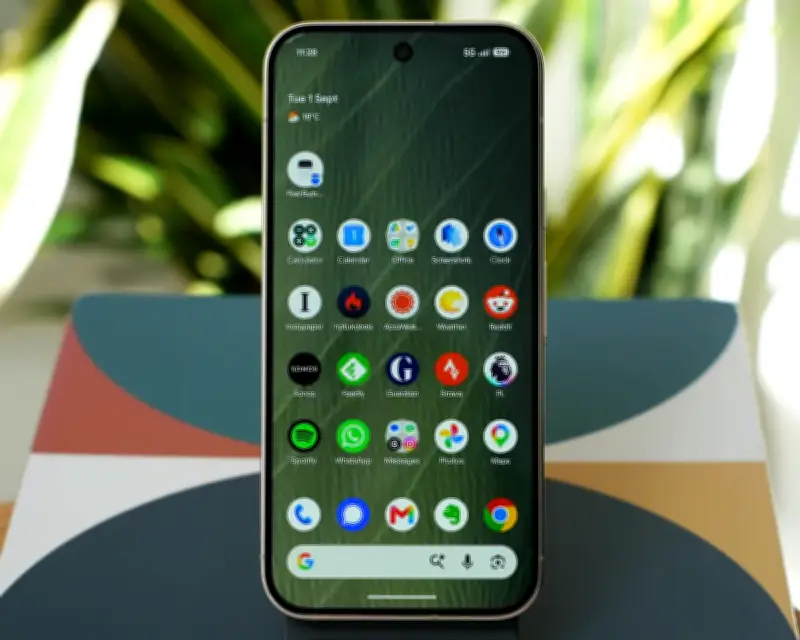
The Pixel 11 Pro offers Google’s best camera in a smaller, pocketable phone, with new customisation tools that let users alter photo processing beyond simple filters, even if it means making images technically worse. It combines top-end hardware and software in a compact frame, making it a strong contender for the best smaller phone of the year.
Design and price
The 11 Pro sits above the regular £879 Pixel 11 and costs from £1,079 (€1,199/$1,099/A$1,849) – £80 (€100/$100/A$150) more than last year, with double the storage but less memory due to rising RAM costs. The exterior has changed little over several generations, with a 6.3in OLED screen, polished aluminium and glass body, and a large camera bar. It measures 0.1mm smaller in all directions and is 3g lighter than its predecessor.
A temperature sensor from previous Pro models has been replaced by a coloured HiLight LED that works as a camera flash and notification light. It glows when talking to Gemini or pulses in one of five colours when a favourite contact calls, but it does not work for other notifications, which is a missed opportunity.

Performance and battery
The 11 Pro uses the same Tensor G6 chip as the regular Pixel 11, with 12 or 16GB of RAM depending on storage. It cannot match top Qualcomm or Apple chips for gaming but is snappy for daily tasks. Battery life is just shy of two days with about seven hours of active screen use across wifi and 5G, slightly behind the regular Pixel 11 but enough for heavy use days. Most people will charge every other day.
The phone runs Android 17 and will receive software and security updates until August 2033, making it one of the longest-lasting devices available. It includes six months of Google AI Pro subscription, offering Gemini Omni for eight-second video generation, higher AI usage limits, 5TB of cloud storage and Google Health Premium. Local AI features include Rambler voice dictation in Gboard, which turns rambling speech into succinct sentences, and improved Gemini proactive assistance, though it only works in certain apps.
Camera and customisation
The rear camera system includes a 50MP wide, 48MP ultra wide and 48MP 5x telephoto, plus a 42MP selfie camera. All capture high-quality photos in various lighting, with the wide and telephoto lenses now capturing more light. The new Instant Night Sight speeds up low-light shots by up to 4.5 times. The 5x telephoto offers a 10x crop zoom, stretching to 120x magnification using digital zoom to 30x and generative AI beyond.
Camera Looks is a standout feature, letting users modify photo processing from subtle shadow changes to distinctive styles like “minimal” for more raw images, “digi” for old digital camera looks, and “velvet” for film-like effects. Each look can be further customised. Video features include Magic Capture for point-and-shoot recording and a new Creator Suite for storyboarding and trimming clips.
Sustainability and verdict
The battery is rated for over 1,000 full-charge cycles with at least 80% capacity retained, and the phone is repairable by Google, third-party shops, or self-repair. It contains 31% recycled materials by weight, with free recycling for old devices. Charging takes about 90 minutes with a 30W adaptor, reaching 54% in half an hour, and supports 25W Qi2.2 wireless charging.
The Pixel 11 Pro is a refinement rather than a revolution, but it remains one of the best smaller phones, offering top cameras, AI features, and a pocketable design. The customisable camera processing and faster Night Sight are significant improvements, while battery life and software quality are strong. It is not a massive upgrade over the Pixel 11 or recent Pro models, but it is a great pocketable phone with pros including excellent camera zoom and customisation, seven years of updates, and good battery life, though it is expensive and has less memory on the cheapest model.