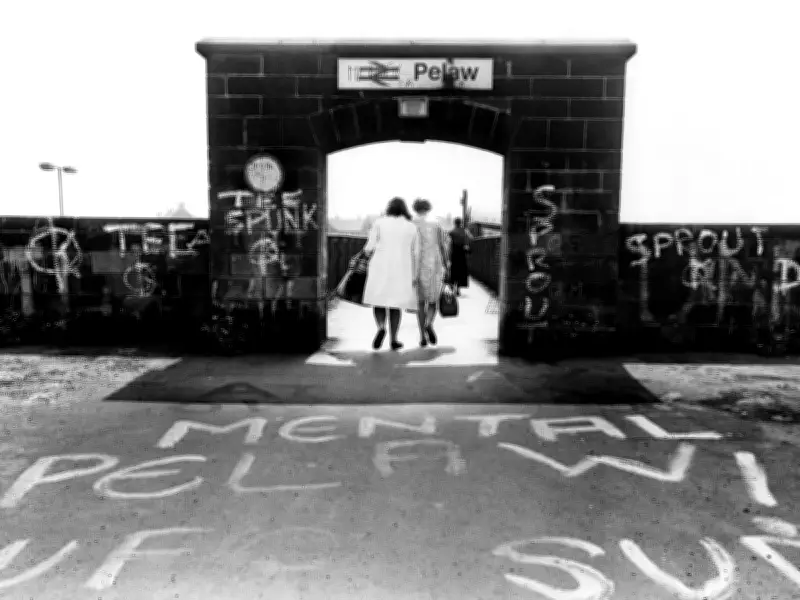
Fifty years ago, Pelaw railway station in Gateshead was a vandalised and graffiti-covered site, reflecting the urban decay of the era. Today, it stands as a busy station on the Tyne and Wear Metro, having undergone significant changes since its 1976 state.
From Victorian Beginnings to Decline
The station first opened in 1843, just six years into the Victorian era, and quickly became a familiar landmark on Tyneside's expanding rail network. Alterations followed in 1850 and 1857, and by 1879, it was a regular stop for trains between Newcastle and South Shields.
In its early decades, Pelaw witnessed several tragedies. In 1874, a Jarrow couple were struck and killed near the station, and later that year, a pitman was decapitated while crossing the line. Further incidents occurred in 1885, 1899, and 1903, including the deaths of a mother and her three children, a 17-year-old girl, and an unidentified woman.
Industrial Hub and Closure
The station saw further changes in 1896, as Pelaw became an industrial centre. The Co-operative Wholesale Society built factories stretching almost a mile along Shields Road, employing around 3,000 workers at its peak. Most factories closed during the 1970s and 1990s, with the final closure in the early 2000s.
British Rail closed the station in 1979, with Heworth Interchange taking over as the local rail stop. Heworth continued to serve passengers when the Tyne and Wear Metro opened in 1981.
Metro Era and Modernisation
The Metro line was extended through Hebburn and Jarrow towards South Shields in 1984, and Pelaw reopened as a purpose-built Metro station the following year. In 2002, the new Sunderland line branched off just east of Pelaw, and in 2006, the station received a major £1.2m refurbishment, creating the modern transport hub familiar to passengers today.