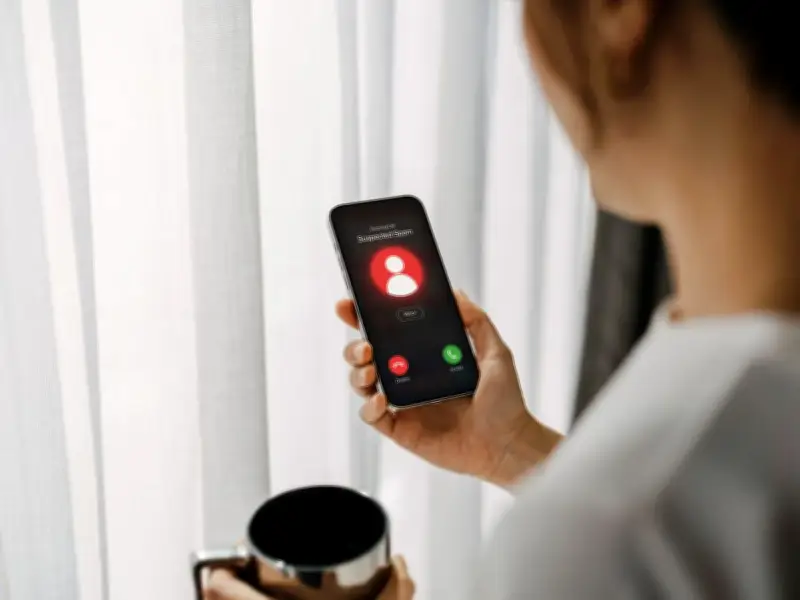
If you've been bombarded with suspicious phone calls and messages in recent weeks, you're not alone. Social media is awash with complaints about 'excessive' spam calls, with some reporting receiving up to three or four a day.
The calls can appear to come from ordinary-looking UK mobile numbers, with one 'add me to WhatsApp' scam now particularly prevalent.
New research from Nationwide found, on average, people are receiving suspicious calls more than three times a week. The survey of 2,000 people found consumers are exposed to potential scams almost daily, as well as around two suspicious texts a week.
Why are we getting more scam calls?
Experts say there is no evidence that one particular event has caused the current surge. Professor Daniel Dresner, Academic Lead for Cyber Security at the University of Manchester, said he would be "surprised" if it came down to a single reason. He says criminals can obtain phone numbers in a number of ways, while modern technology allows them to target huge numbers of people quickly. And the data they use does not necessarily have to be newly stolen.
According to Dr Mustafa Mustafa, Senior Lecturer in Systems and Software Security at the University of Manchester, there are two key drivers behind the rise of scam phone calls. Firstly, he says it's because deep fake voice models that mimic real human voices are becoming "much better". "It is becoming more challenging to distinguish what is real and what is fake voice," Dr Mustafa told the Manchester Evening News.
Secondly, he says with the rise of generative AI models, "it is becoming much easier to build an entire system which can automatically target everyone". "Now the entry barrier is much lower," he adds. "One does not need to be highly skilled to be able to build such systems."
So despite major data breaches having recently hit the news, experts say it isn't necessarily one single leak responsible for the notable rise in scam calls. In fact, a number leaked in a data breach months or even years ago could still be in circulation.
Don't answer unknown callers
When it comes to dealing with the calls themselves, Prof Dresner has one simple rule: don't answer it. He said many automated calls will ring a few times before cutting off, as the system moves on to the next number if nobody answers. Answering can also signal to scammers that there is somebody actively using the number, he warns.
"It is actually quite important to ignore it. If you answer it, they are at least going to put you onto their database," he explained. "They will put onto their database that there is somebody at the end of the phone. Let's try them again."
Instead, he recommends letting unknown numbers go to voicemail and contacting people back yourself if necessary. "If someone says, 'I'll give you a call', I'll say, 'Please leave me a message and I'll call you back,'" he said. "Or send me a text first, because you can read a text in relative safety."
Don't trust the number on your screen
A call appearing to come from a familiar number or company does not necessarily mean it is genuine. If someone claims to be calling from your bank, phone provider or another organisation, hang up and contact them yourself using an official number.
Prof Dresner said: "The banks always say that if you're unsure, put the phone down and then call us back on the number on the back of your card."
Think before clicking
Be wary of links sent by text, email or WhatsApp, particularly if the message creates a sense of urgency or asks you to provide personal or financial information.
Prof Dresner previously warned people to be careful about where they go online following a major data breach. He said after Manchester Airports Group suffered a cyber attack last month, with around 8.7million customers’ data accessed: “The airport should be thoughtful about how they deal with customers, one of the worst things they can possibly do now is send people emails saying please click on this link for more information - because that’s exactly what the criminals will do. So they should certainly encourage people to go to the legitimate site - even taking caution when using search engines as they aren’t themselves infallible. So people need to be really careful where they are going and what they click on.”
Consider registering with the TPS and call screening tools
The Telephone Preference Service (TPS) allows people to register their number to reduce unsolicited marketing calls. It will not stop criminal scam calls, but Prof Dresner said registering could "reduce, not eliminate" the number of unwanted calls received.
Most modern smartphones have settings which can identify or screen calls from unknown or suspected spam numbers. It might be worth checking your phone's settings to see which options are available to you.
If you have handed over personal or banking information or made a payment, contact your bank or the relevant organisation immediately using an official route. And don't be embarrassed to report what has happened.
Dresner previously told the M.E.N: "There is no shame if you think you have been taken in by a criminal. One thing to remember is that there is no shame if you think you have been taken in by a criminal. People should not be ashamed to report these things straight away. You are essentially being played by professional criminals. They shouldn’t feel any guilt."