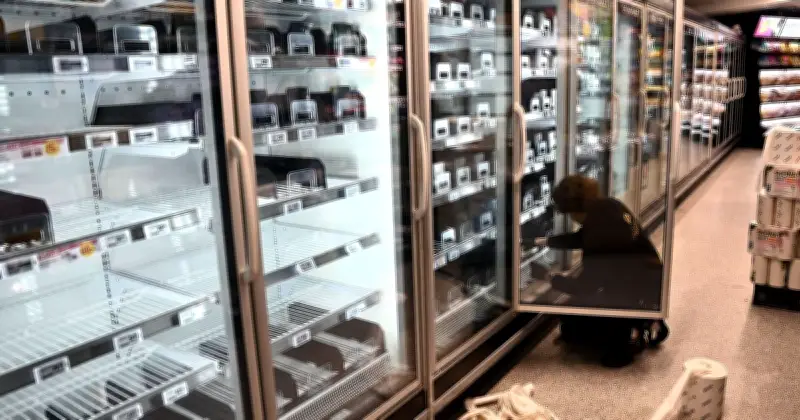
A leading cybersecurity expert has warned that the cyberattack targeting supermarket fridges and freezers across Europe could signal much bigger threats to the UK's critical infrastructure. Anders Storbråten, cybersecurity expert at Norwegian biometrics company IDEX Biometrics, told the Express that the recent fridge hacking "exposes a widespread and serious flaw in the system" and warned that "this is just the beginning".
Attacks Across Europe
The warning follows a series of cyberattacks targeting supermarkets and food suppliers in France in October, followed by further incidents on November 2, when refrigeration systems in seven European countries were compromised. Hackers remotely manipulated refrigeration controls, causing temperatures in some supermarket fridges and freezers to soar to as high as 50C.
Retailers reportedly affected included Carrefour and Intermarché in Belgium, Coop and ICA in Sweden, Delhaize in Luxembourg, Kesko in Finland and SuperValu in Ireland, as well as businesses in Estonia and the Netherlands. The attacks have also reached the UK, with the National Cyber Security Centre (NCSC) confirming that vulnerable technology had been exploited at a small number of British organisations.
UK Response and Warnings
The NCSC warned British retailers to urgently update the software on fridge temperature controllers, stating that the attack is a "wake-up call" and that our "digital infrastructure remains outdated and vulnerable." Speaking at the launch of the NCSC's annual review on November 3, its director of operations, Paul Chichester, said: "We're aware of those incidents in the UK, and obviously we're working with the affected organisations. We'll keep monitoring that. At the moment, the impact is minimal."
Following these recent events, Storbråten told the Express: "The fact that attackers can manipulate something as seemingly mundane as a fridge, with incredibly serious consequences for food supplies and even critical medical resources, exposes a widespread and serious flaw in the system. But this is just the beginning. Today it's supermarket fridges, but what happens when attackers exploit similar vulnerabilities in the electricity grid or water treatment facilities?"
Broader Infrastructure Risks
Storbråten added: "As more infrastructure becomes connected and remotely managed, every device and access point presents a potential vulnerability that can be exploited by hackers. There is no time to wait, and the UK and France are far from insulated when it comes to these threats. Most of these countries' critical infrastructure, from healthcare and food distribution to energy and transport relies on decisions made remotely, with passwords, codes and apps checked on a server. That has served us for two decades, but it does not hold up against attackers using agentic AI, and getting it wrong will be very expensive."
The expert continued: "A weakness in one part of that supply chain can have consequences far beyond the initial target. In critical operations, the decision about who has access should be made locally, on hardware, with a verified human in the loop. The more security can be managed in person and kept offline, including the credentials themselves, the harder it becomes for hackers, particularly those using agentic AI, to exploit vulnerabilities remotely."
He concluded: "These incidents are a stark reminder that cybersecurity is no longer just about protecting digital networks and data. It is about keeping the lights on, the water running and the essential services that millions of people depend on every day functioning. The stakes are much higher than a hacked fridge."