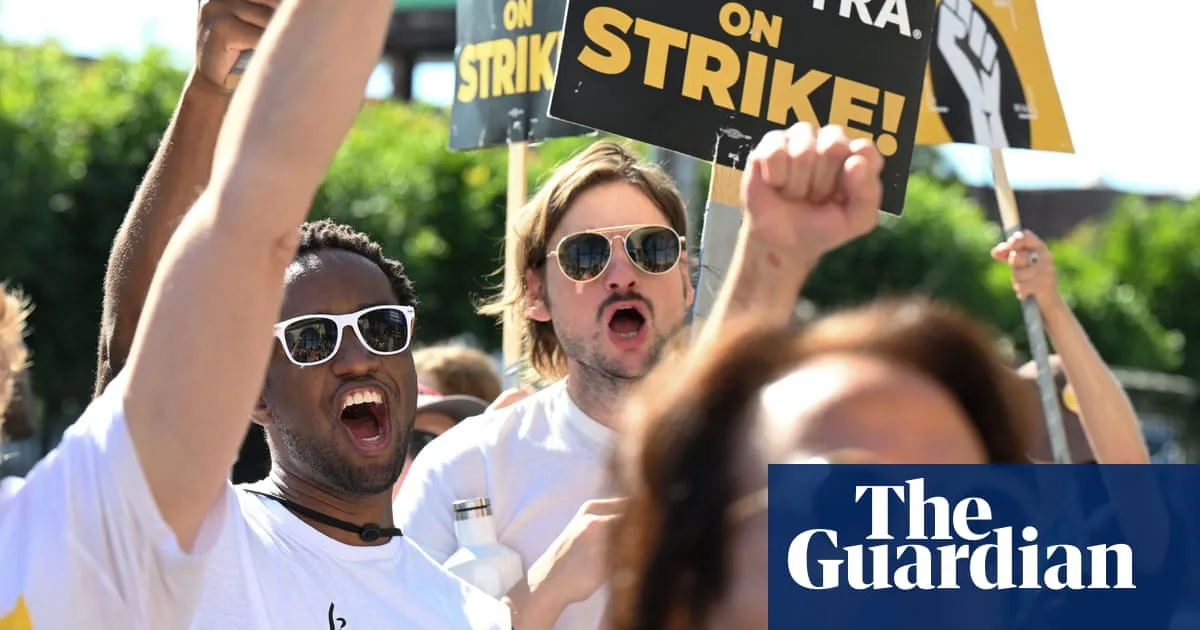
Voice actors around the world are raising the alarm over artificial intelligence, which they say threatens not only entry-level roles but the entire dubbing industry, valued at over £3bn globally. Professionals including the Italian voice of Jon Snow and the French voice of Sylvester Stallone have joined a coalition fighting to protect their livelihoods and identities.
In Germany, home to 'the Oscars of dubbing', artists have warned that their jobs are at risk as studios use AI trained on their voices without consent. Patrick Kuban, a French voice actor and organiser with the dubbing union Voix Off, described the situation as 'war'. The campaign #TouchePasMaVF ('don't touch my French version') aims to have dubbing added to France's l'exception culturelle, a policy protecting cultural goods as part of national identity.
Dubbing is not mere translation, Kuban explained, but adaptation to local humour, culture and emotion. A 2023 study by the Audiens Group estimated that AI could put 12,500 jobs at risk in France alone, including writers, translators, sound engineers and voice actors. Tim Friedlander, president of the US National Association of Voice Actors, stressed that humans bring experience, trauma and emotion to roles, which AI cannot replicate.
Earlier this year, UK startup ElevenLabs announced plans to clone the voice of Alain Dorval, the French voice of Sylvester Stallone, for a new thriller on Amazon. Contracts often do not specify how voices may be reused for AI training, creating synthetic voices that could replace actors entirely. Kuban warned that without protection, jobs across media, music and cultural industries would be lost.
Daniele Giuliani, the Italian voice of Jon Snow in Game of Thrones, said: 'If you steal my voice, you are stealing my identity.' The United Voice Artists coalition, formed by over 20 voice acting guilds, is campaigning under the slogan 'Don't steal our voices'. As AI technology becomes more accessible, the threat has shifted from theoretical to immediate, with platforms like Deepdub offering AI-powered dubbing services for films.