TikTok User 'PickleFart' Helps Texas Baker Diagnose Thyroid Cancer
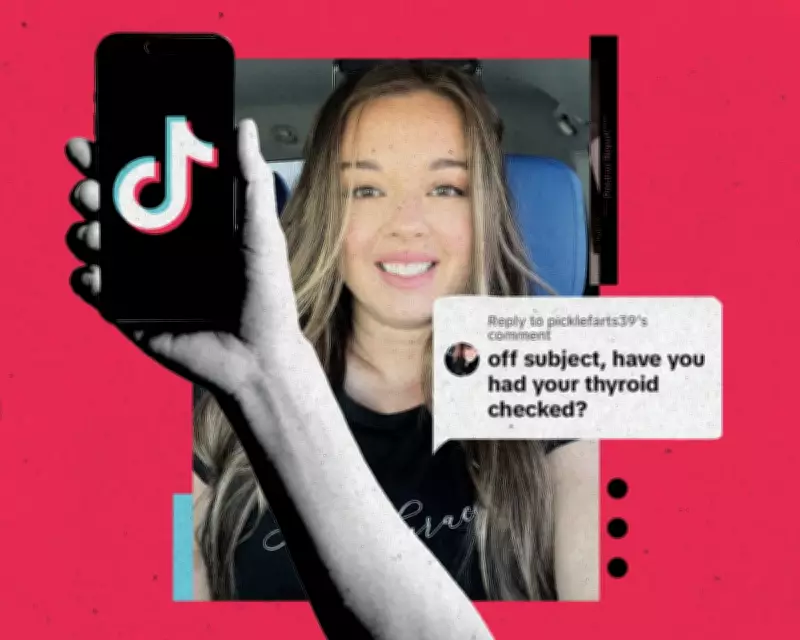
Malina Lee, a 31-year-old wedding baker from San Antonio, Texas, joined TikTok during the 2020 Covid-19 lockdowns to pass time and promote her business. She never anticipated that a comment from a user with the username "PickleFart" would lead to a life-saving thyroid cancer diagnosis.
Early Detection Through Social Media
Four years after joining the platform, Lee received a comment from "PickleFart" noting that her neck appeared asymmetrical, potentially indicating a goiter or enlarged thyroid gland. The commenter urged her to seek medical evaluation. Following this advice, Lee was diagnosed with thyroid cancer, underwent prompt treatment, and was declared cancer-free within a year.
"My oncologist was in awe that I had caught it so early," Lee said. "I hate to say it, but I would not have gone to the doctor unless I had seen that comment. The process was accelerated by someone called PickleFart, what can I say?"

The Rise of TikTok as a Diagnostic Tool
TikTok users are increasingly reporting that the app's algorithm and community interactions help identify medical issues before formal diagnoses. In many cases, users find their symptoms mirrored in others' posts, leading to professional medical consultations. For Lee, a human commenter provided crucial insight that doctors had not yet identified.
"PickleFart," whose real name is Billie Jean Tuomi, has a personal connection to thyroid health. Diagnosed with thyroid cancer in 2012 and cancer-free after two years of treatment, she now acts as a "thyroid avenger," commenting on videos to alert creators about potential thyroid problems. By her estimate, she has correctly identified serious issues in at least four cases, including Lee's.
"If it weren't for the original comment, I'd probably be really sick now or would still have cancer," Lee added. "I do owe my life to TikTok now."
Navigating Healthcare Challenges Online
Tuomi emphasizes that she does not diagnose conditions but encourages people to see doctors. Her efforts have sparked a surge of online attention, with strangers sending neck photos for evaluation, prompting her to change her username to "PickleFart" for privacy. "It's kind of funny, but it's also kind of sad," Tuomi remarked. "It shows how broken the American healthcare system is that people are seeking out medical advice on social media apps."
Craig Mittleman, director of emergency services at Lawrence + Memorial Hospital in Connecticut, notes a sharp increase in patients with internet-influenced diagnoses over the past five years. While social media can empower patients to ask informed questions, it also leads to misinformation that doctors must debunk, sometimes straining patient-doctor relationships.
"Part of the problem is most patients and most lay folk don't know how to distinguish between good information, actionable information and misinformation that could lead somebody astray," Mittleman explained.
Community and Support for Women in Healthcare
Research indicates women are more likely to seek health information online, often due to gender inequities in healthcare. Many women on TikTok report being dismissed in medical settings before turning to the platform for validation and advice.
Tori Mosser, a 23-year-old filmmaker in Dallas, credits a TikTok viewer for suggesting chronic appendicitis based on her documented vomiting episodes. Despite initial dismissal by her surgeon, Mosser later underwent emergency surgery, and her symptoms resolved, suggesting the condition was chronic. "As much as I would love to say otherwise, it is very true that being a woman can contribute to being dismissed in healthcare settings," Mosser said.
Lee has also found community on TikTok for an autoimmune disorder diagnosed after her cancer treatment. "With chronic illness, or any condition where you look healthy on the outside, the world dismisses you because it's an invisible illness," she noted. "I really rely on my feed as a place I can go for comfort and realize I'm not alone in my experiences."

This trend underscores the dual role of social media in healthcare: offering support and early detection while highlighting systemic issues in medical access and misinformation.