Peter Thiel's Antichrist Lecture Series in Rome Sparks Controversy and Institutional Withdrawal
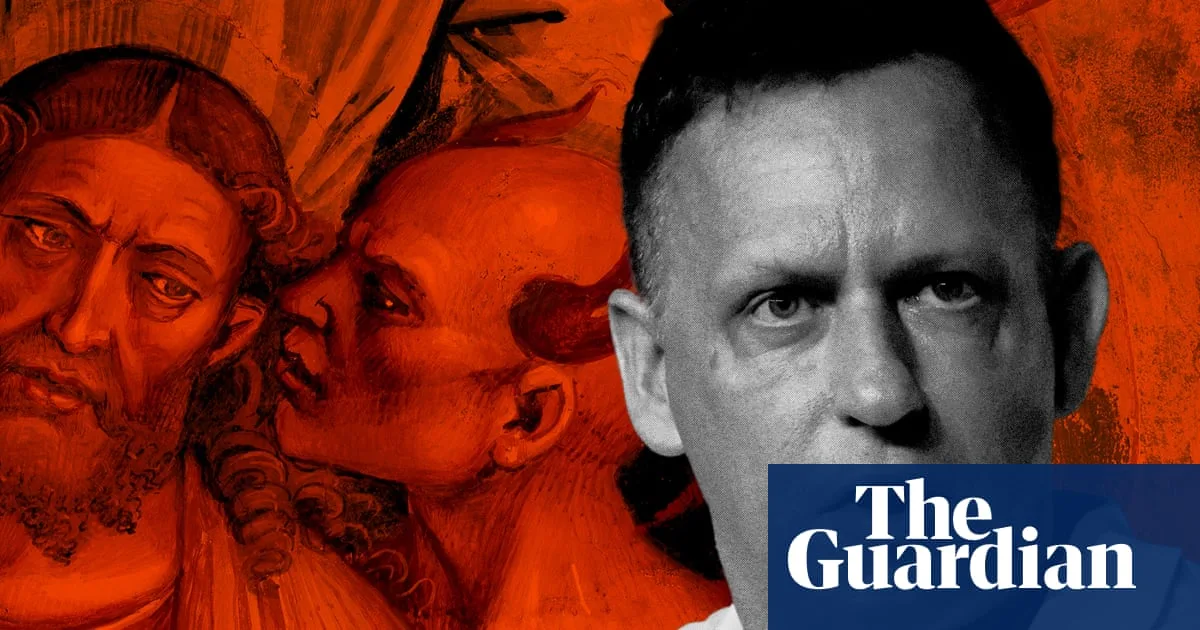
One of the most sought-after events in Rome currently is a four-lecture series on the Antichrist, presented by Silicon Valley tech billionaire Peter Thiel. The invitation-only conference, scheduled from Sunday to Wednesday, has ignited significant controversy, prompting Catholic universities initially linked to the event to publicly distance themselves from any official involvement.
Catholic Institutions Take Their Distance
Discussions of the Antichrist by a prominent tech figure in the Vatican's vicinity have proven highly divisive. Initially, reports suggested the lectures would be held at the Pontifical St. Thomas Aquinas University, commonly known as the Angelicum, a Dominican university in Rome renowned as the alma mater of Pope Leo XIV. However, as Italian media circulated news of alleged secret lectures by Thiel at the pope's former institution, the Angelicum issued a clear statement.
"We would like to clarify that this event is not organized by the University, will not take place at the Angelicum, and is not part of any of our institutional initiatives," the university declared on its website.
According to an event announcement reviewed by The Associated Press, the lectures were "jointly organized" by the Italian Vincenzo Gioberti Cultural Association and the Cluny Institute at the Catholic University of America in Washington. The Gioberti group, named after a 19th-century Italian Catholic philosopher, confirmed its participation, emphasizing its mission to promote research based on classical and Christian thought to address contemporary Western crises.
In contrast, the Catholic University of America distanced itself from the event. A university spokesperson stated, "The Catholic University of America is not sponsoring or hosting an event featuring Peter Thiel this month in Rome. The Cluny Project is an independent initiative incubated at the university." The Cluny Institute, a CUA initiative bridging academia, religion, and technology, previously hosted Thiel in 2023 for a talk on French academic René Girard.
Thiel's Fascination with the Antichrist
Peter Thiel, co-founder of PayPal and Palantir, is known for his deep interest in apocalyptic concepts, particularly the Antichrist—a Biblical figure opposing Christ—and Armageddon, the final battle between good and evil. He explores these themes in relation to humanity's existential risks today. In a November essay for the Catholic magazine First Things, Thiel reflected, "Christians debated these prophecies for millennia. Who was the Antichrist? When would he arrive? What would he preach?"
The Rome lectures mirror a four-part series Thiel delivered in San Francisco last September. Invitations for the Rome event replicate descriptions from the San Francisco talks, noting that Thiel's remarks will anchor on science and technology while commenting on the theology, history, literature, and politics of the Antichrist, drawing from thinkers like René Girard and John Henry Newman.
Political Ties and Broader Implications
Thiel's career includes co-founding PayPal in 1998, part of the so-called "PayPal Mafia" with figures like Elon Musk. After PayPal's sale to eBay in 2002, he founded Clarium Capital Management and helped launch Palantir Technologies, which recently secured an agreement with U.S. Immigration and Customs Enforcement to streamline deportations.
Politically, Thiel has been a key advisor and donor to former U.S. President Donald Trump and maintains ties to the White House. He is also closely associated with Vice President JD Vance, having invested millions in Vance's Senate primary race. Vance, a Catholic convert and prominent figure in U.S. politics, has faced theological criticism, including from Pope Francis, for justifying Trump's immigration policies based on Christian concepts of love.
Before his election as Pope Leo XIV, Robert Prevost shared an article criticizing Vance's stance, titled "JD Vance is wrong: Jesus doesn't ask us to rank our love for others." Vance later attended Leo's installation and delivered a letter from Trump inviting the pope to visit.
This lecture series underscores the intersection of technology, religion, and politics, highlighting ongoing debates within Catholic circles and beyond. As Thiel brings his provocative ideas to Rome, the institutional backlash reflects broader tensions in addressing apocalyptic themes in modern discourse.