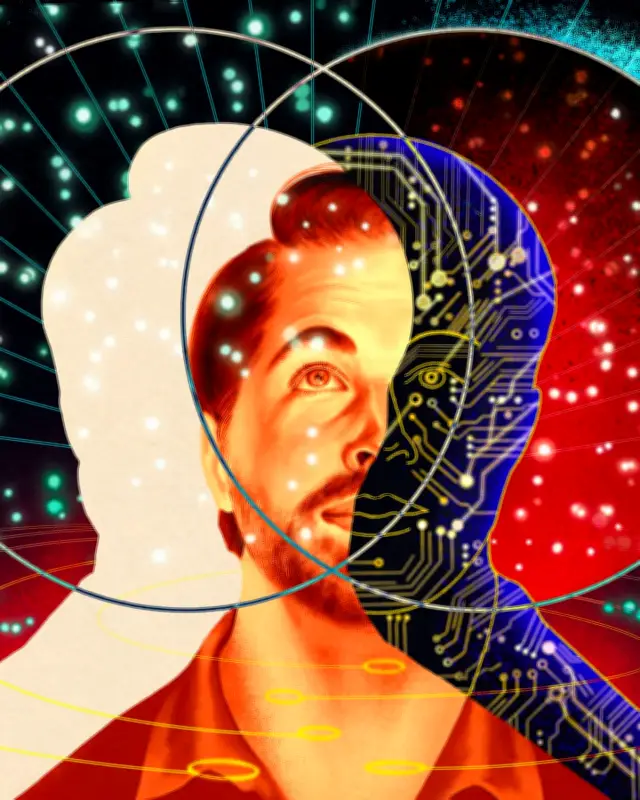
Iason Gabriel, a political philosopher, joined Google DeepMind in 2017 as the only active philosopher at a frontier AI lab. Since then, he has been pivotal in shaping ethical frameworks for artificial intelligence, addressing challenges from anthropomorphism to the alignment problem. His work straddles the divide between AI safety, focused on existential risks, and AI ethics, concerned with present-day harms like bias.
From Academia to AI
Before DeepMind, Gabriel taught political theory at Oxford and worked with the UN in Sudan and Lebanon. His move to tech was prompted by a friend's suggestion, despite his initial puzzlement over why a game-playing AI company needed an ethicist. DeepMind, founded in 2010, aimed to develop artificial general intelligence (AGI) – systems matching or surpassing human cognition. Co-founder Shane Legg noted that if you take AGI seriously, moral philosophers are essential.
Bridging Safety and Ethics
Gabriel's 2020 paper on values and alignment argued that technical alignment must consider ethical and political dimensions. He stressed that in a pluralistic world, choosing which values to encode in AI is as critical as ensuring compliance. Hannah Rose Kirk, an Oxford AI researcher, said Gabriel anticipated problems that later emerged with large language models (LLMs), such as sycophancy and social reward hacking.

The Rise of LLMs and Commercial Pressures
ChatGPT's launch in November 2022 forced DeepMind to reassess its focus on reinforcement learning. By April 2023, Google merged its LLM team into DeepMind, with Demis Hassabis calling it "wartime." Gabriel co-authored early papers warning of LLM risks, including bias, misinformation, and copyright issues. He advocated for anti-anthropomorphic designs to prevent undue trust, though he later softened his stance after public backlash.
Ethical Frameworks in Practice
Gabriel led a 267-page report on AI assistants, framing alignment as a four-way relationship among AI, user, developer, and society. This framework helps train models like Gemini. Rohin Shah, DeepMind's AGI alignment director, said it provides structure for determining desired behaviour. However, ethical challenges persist, including Google's April 2025 agreement to allow US military use of its AI, reversing prior restrictions.
Broader Impacts and Future Outlook
Gabriel now leads a team studying AGI's impact on economy, politics, and relationships. He compares the transition to the Industrial Revolution, warning it may get worse before getting better. Yet he sees potential for human flourishing if risks are navigated. As Legg noted, "There's no magic remaining" in achieving AGI, with timelines of three to five years. Gabriel remains a "card-carrying humanist," insisting AI should not render humanity obsolete but prompt deeper reflection on what it means to be human.