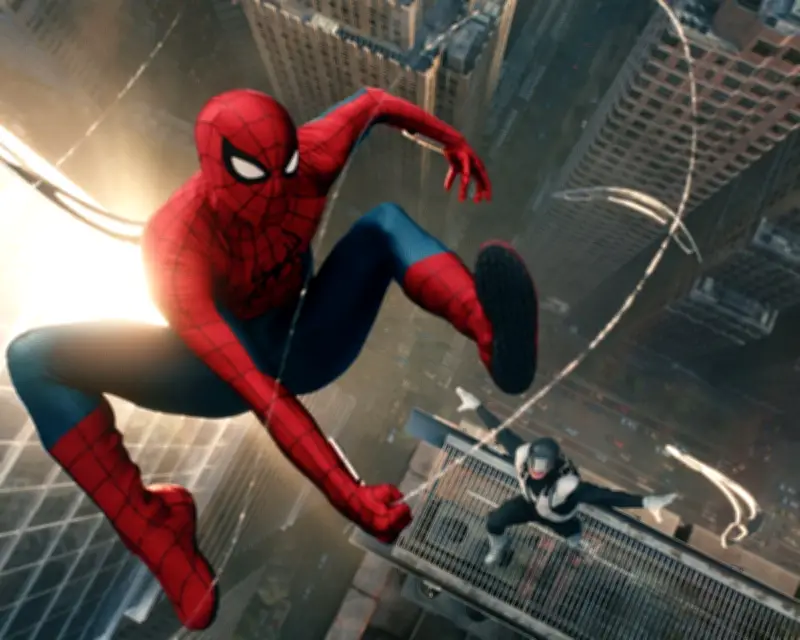
Spider-Man's iconic origin story—a radioactive spider bite granting superhuman abilities—has been thoroughly debunked by science, casting a shadow over the upcoming Marvel film Spider-Man: Brand New Day. According to a press release from Glasgow's Kelvinside Academy, the real-world consequences of such an event would be far from heroic, ranging from infertility to catastrophic physical injuries.
The Science Behind the Bite
Biology teacher Ian Nicholson from Kelvinside Academy explained that the notion of gaining superpowers from a radioactive spider bite is scientifically implausible. Spiders are so small that they would transfer only a negligible amount of radioactive material. However, if the spider were large enough, highly radioactive, and managed to bite Peter Parker directly on a testicle, there would be a marginally increased risk of infertility—hardly the stuff of superhero legends.
Nicholson shared a real-world example: “I actually know somebody who was bitten by a radioactive cat. The cat was radioactive because it had recently undergone iodine isotope treatment for an overactive thyroid.” The friend did not develop superpowers but instead “was treated amazingly by the NHS.”

Web-Swinging: A Recipe for Disaster
Physics teacher Ben Fitzgerald debunked the physics of web-swinging, a hallmark of Spider-Man's crime-fighting. The biggest danger, he noted, is poorly maintained buildings: “If you’ve attached it to paintwork or old brickwork, there’s every chance the wall comes away before the web does.” But even on sturdy structures, the forces involved would be devastating. The tension at the bottom of a swing reaches roughly four times body weight, enough to dislocate the shoulder, tear the rotator cuff, rupture the biceps tendon, damage the brachial plexus, and tear ligaments in the elbow and wrist. Rapid direction changes could cause whiplash, spinal compression, rib injury, organ bruising, retinal injury, concussion, and vascular damage. There's also a risk that if the web wraps around the wrist, it could de-glove all the skin from the hand.
Implications for the MCU
These revelations come at a critical time for Marvel, which is banking on Spider-Man: Brand New Day and Avengers: Doomsday to revive audience interest after a period of superhero fatigue. The commercial disappointment of DC's Supergirl suggests the public is weary of formulaic caped crusader tales. For Spider-Man: Brand New Day to succeed, it may need to address these scientific inaccuracies—or risk shattering viewers' disbelief.
The analysis also takes aim at the Incredible Hulk, who appears in early promotional material for the film. Gamma radiation exposure would not lead to increased size and strength but rather to nausea, vomiting, diarrhoea, weakness, confusion, headaches, and dizziness, followed by multi-system failure and a painful death. Similarly, for Avengers: Doomsday, realism would require Reed Richards to suffer terminal connective tissue failure, Johnny Storm to die from extensive airway burns, and Victor Von Doom to develop infected pressure sores from his mask and armour.
While the study is tongue-in-cheek, it underscores the vast gap between comic book fantasy and scientific reality. Marvel has less than a month to recut scenes to depict Peter Parker as a normal human with extensive organ damage, a dislocated torso, and one enlarged gonad—a grim but accurate portrayal. Only then, the article suggests, might the MCU regain trust.