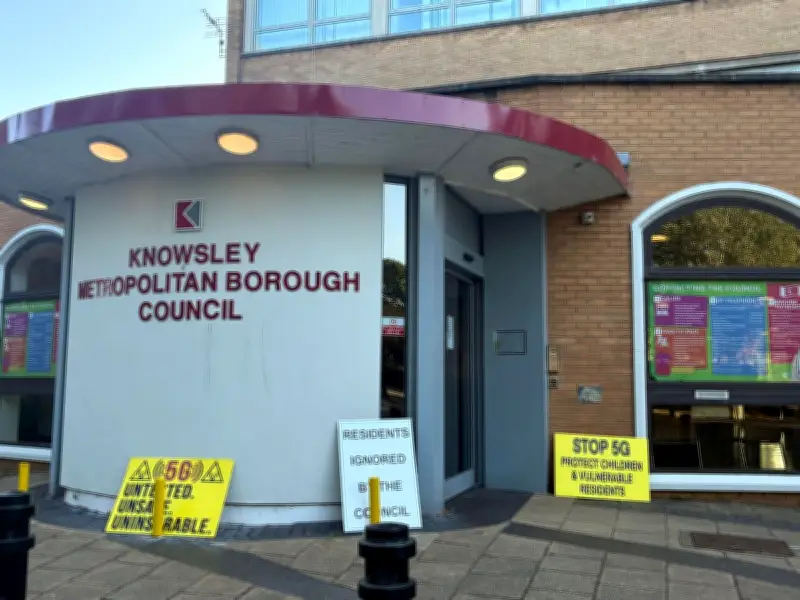
Plans for three new 5G antennas and a GPS device on a Kirkby building have been approved by Knowsley Council, despite strong opposition from protesters at a fraught planning committee meeting. The antennas, to be installed by EE, will be located on a tall rectangular building near the Market Tavern pub and off St Chads Parade, a site that already hosts telecommunications equipment.
The three antennas, each three metres high, will be positioned between 13 and 16 metres above ground level, while the GPS node will sit 12 to 13 metres above ground. The council stated that the equipment will not be visible up close due to the building's height, but will be noticeable from afar, such as from Newton Gardens.
Objections and Health Concerns
Eighty-four people objected to the application, citing concerns over fire safety, the visual impact of the antennas, an inadequate consultation process, and a lack of long-term health studies on 5G. During the meeting, local resident Jean Evans spoke against the plans, raising issues about the validity of the International Commission on Non-Ionizing Radiation Protection (ICNIRP) declaration and potential interference with medical implants like pacemakers.
Evans stated: "The committee report sanitises major procedural errors and gives a misleading picture of the development. The applicant submitted a seriously defective, invalid mandatory ICNIRP certificate. Residents formally exposed and catalogued faults, 18 in total, showing the proposal had been validated based on false, non-compliant data." She also noted that ICNIRP excludes those with medical implants, arguing that the council has a statutory duty to protect vulnerable residents.
Council and Applicant Responses
Alan Kilroe, head of planning and building control, responded that the applicant had addressed all health matters, a comment met with shouts of "it's rubbish" from the public gallery. The council stated that the applicant had submitted relevant ICNIRP certification, which was updated and corrected during the application process. It also noted that national planning policy prevents local authorities from questioning the need for equipment to meet increased demand for telecoms infrastructure.
William Osborne, speaking on behalf of EE, said: "We submitted a valid ICNIRP certificate setting out compliance with both national and international standards regarding the level of emissions from the equipment. We have seen a huge increase in demand for connectivity from the population, whether that’s from working from home, coordinating deliveries and schooling, or connecting with loved ones." He added that EE will be the sole network provider for all emergency services, making connectivity a public benefit.
Decision and Aftermath
The proposals were approved by the committee, although seven of the 17 councillors present voted against. Following the meeting, Evans told the ECHO: "They make out like this is just a commercial space but it’s social as well. The area looks terrible. The ICNIRP declaration is not worth the paper it’s written on. As far as I’m concerned this council has just voted to take full accountability for people who are harmed."