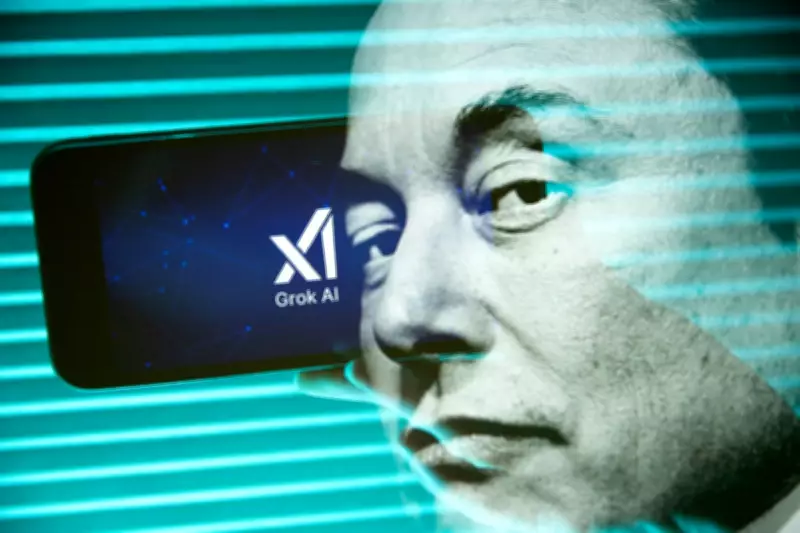
Elon Musk's artificial intelligence venture, xAI, has been rocked by the departure of half its founding team, even as the billionaire entrepreneur outlines ambitious plans to catapult AI technology into space. Co-founders Tony Wu and Jimmy Ba announced their exits via social media platform X, formerly known as Twitter, leaving the company with just half of its original founders less than three years after its inception.
Founder Exodus and Corporate Turmoil
Neither Wu nor Ba provided specific reasons for their decisions to leave xAI, though both expressed gratitude towards Mr Musk in their public statements. This development adds to a period of significant upheaval within the company, which was recently merged with Musk's aerospace firm SpaceX ahead of an anticipated public listing later this year. The timing of these high-profile departures raises questions about the internal stability and strategic direction of the AI startup as it prepares for a major financial milestone.
Lunar Ambitions and Catapult Technology
Shortly after the co-founders announced their exits, though without directly linking the events, Elon Musk revealed a bold new vision during a staff meeting. He expressed a desire to launch artificial intelligence satellites into space and towards the Moon using a giant catapult system, referred to as a "mass driver." Musk argued that relocating AI infrastructure beyond Earth's atmosphere could unlock unprecedented computational power and capabilities.

"You have to go to the moon," Musk told employees, according to reports first published by the New York Times. "It's difficult to imagine what an intelligence of that scale would think about, but it's going to be incredibly exciting to see it happen." The proposed catapult would fling satellites into orbit, facilitating the construction of a lunar base that could, in turn, power a fleet of space-based satellites to enhance AI systems.
Strategic Shift from Mars to the Moon
Historically, Elon Musk and SpaceX have primarily focused on Mars colonization, viewing the Moon as a stepping stone for missions to the red planet. However, recent indications suggest a notable shift in priorities. Musk has posted a series of tweets hinting that SpaceX has altered its primary objectives, with the Moon now taking centre stage in his extraterrestrial ambitions.
Despite this apparent pivot, Musk reiterated during the meeting that he still aims to establish a "self-sustaining city on Mars." He described this Martian settlement as a potential hub for further exploration of the universe and the search for alien life, indicating that his long-term vision remains expansive and multi-faceted.
The dual developments of founder departures and futuristic space plans underscore the volatile and innovative nature of Musk's ventures, blending corporate challenges with groundbreaking technological aspirations.