Magician's Visual Tricks: The Science Behind Mind-Bending Optical Illusions
A magician has unveiled the secrets behind a series of captivating optical illusions created by French-American inventor Olivier Redon, demonstrating how visual tricks can deceive the human brain. Earlier today, five illusions were posted, and now, detailed explanations reveal the methods used to craft these perplexing effects.
The Necker Cube: A Foundation for Illusion
Three of the images draw inspiration from the Necker cube, a two-dimensional drawing of a cube that can be interpreted in two distinct ways: either with the bottom left face at the front or the top right face at the front. Once the eyes settle on one interpretation, it becomes remarkably difficult to perceive the alternative, highlighting the brain's tendency to lock onto a single visual narrative.
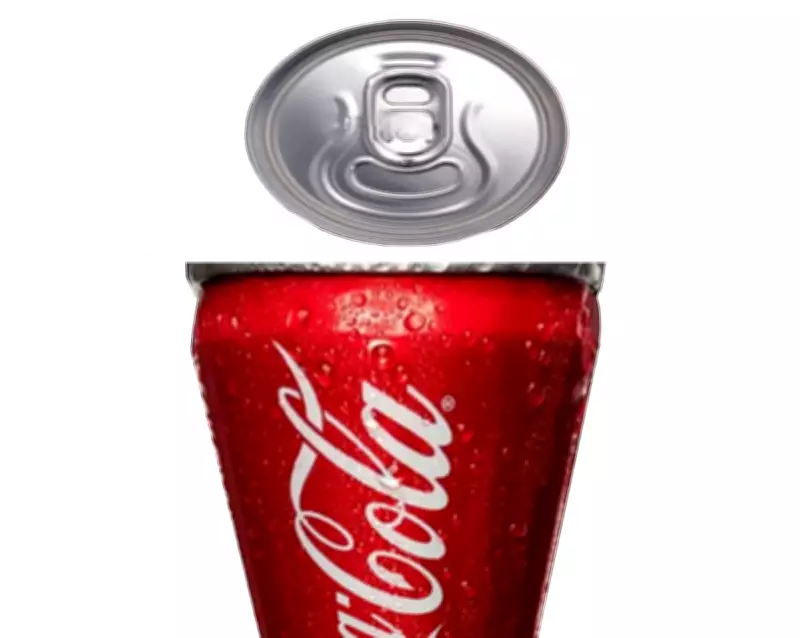
1. Ceci n'est pas une canette: The Can Illusion
This illusion presents an image of a can, but viewers are not looking at the outside of a complete object. Instead, they are observing an inverted internal segment of a can with the top attached upside down. The eyes perceive the shape as curved outwards, when in reality, it is curved inwards. The top of the article displays the two pieces required to create this effect: a top disc and a side section, which are fitted together to produce the deceptive visual.

2. The Oh La La Box: A Cardboard Deception
Contrary to appearances, this is not a red box. Redon is actually holding two pieces of cardboard arranged in an X shape. Similar to the Necker cube, once the faces are seen as protruding outward or inward, it becomes very challenging to view them in the opposite manner. Still images fail to capture the full impact of this illusion; the accompanying video is quite remarkable, making it hard to trust one's own eyes.
3. Twin Dinosaurs: Playing with Perspective
This iPhone image features two dinosaurs that are identical in size, achieved through clever manipulation of lines of perspective. To create this effect, pictures of the dinosaurs were taken from both horizontal and vertical angles, distorting the viewer's sense of scale and depth.
4. Fragile: A Portrait Illusion
This portrait of Redon and his daughter employs a simple yet effective trick, revealed with a ta-dah moment that underscores the playful nature of optical illusions.
5. The Transparent Cube: A Necker Cube Variation
This illusion appears to depict a cube with transparent sides, but it is another iteration of the Necker cube. The three squares with writing are not the outward faces; they are actually the inward faces, further confusing the brain's interpretation of three-dimensional space.
All photographs are copyrighted to Olivier Redon, and enthusiasts can explore his work on his website or follow him on LinkedIn. The puzzle series, running since 2015, continues to seek out great puzzles, with suggestions welcomed via email.