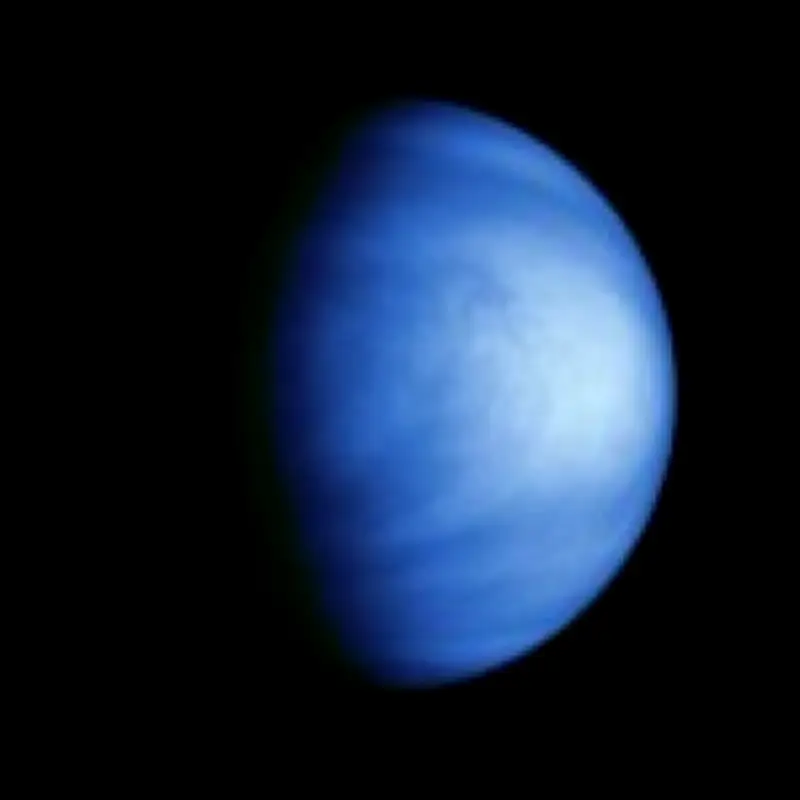
A new study presented at the 2026 Lunar and Planetary Science Conference (LPSC) suggests that if life exists on Venus, it likely originated from Earth. Researchers from The Johns Hopkins University Applied Physics Laboratory (JHUAPL) and Sandia National Laboratories used the Venus Life Equation (VLE) to model the transfer of terrestrial microbes to Venus via asteroids and comets.
Panspermia Theory Gains Ground
The theory of panspermia proposes that life can travel between planets on celestial objects. When impacts eject surface material into space, microbes can survive the journey and seed life on other worlds. The new study explores whether this could have happened with Earth microbes transported to Venus.
The researchers modelled the survival of organic material during interplanetary travel and entry into Venus's atmosphere. They found that some layers within Venus's cloud deck have moderate temperatures and pressures, potentially allowing microbial life to survive.

Billions of Cells Transferred
The team estimated that hundreds of billions of microbial cells may have been transferred from Earth to Venus over time. Their best estimate suggests that around 100 cells are dispersed into Venus's clouds each year, and approximately 20 billion cells could have been transferred over the past one billion years.
According to the researchers, if future astrobiology missions discover life on Venus, it may not be a new alien species but rather long-lost microbe cousins from Earth.