iRobot Launches World's Smallest Robot Vacuum – How Does It Perform in a Busy Family Home?
The Independent's journalism is supported by our readers. When you purchase through links on our site, we may earn commission. Why trust us? iRobot has launched the Roomba mini, which it claims is the world's smallest robot vacuum. But does its neat size mean you have to compromise on cleaning power? I put it to the test in my busy family home to find out.
Sabrina Sahota, Deputy IndyBest Editor Thursday 09 April 2026 19:30 BST
Robot vacuums may seem like futuristic tech, but iRobot actually released its first Roomba model back in 2002. Since then, these devices have evolved dramatically, now incorporating advanced features such as laser-guided navigation, self-emptying docking stations, and mopping capabilities. iRobot aims to innovate even further with its latest model – the Roomba mini, touted as the world's smallest robot vacuum.

Design and Setup: Compact and Colourful
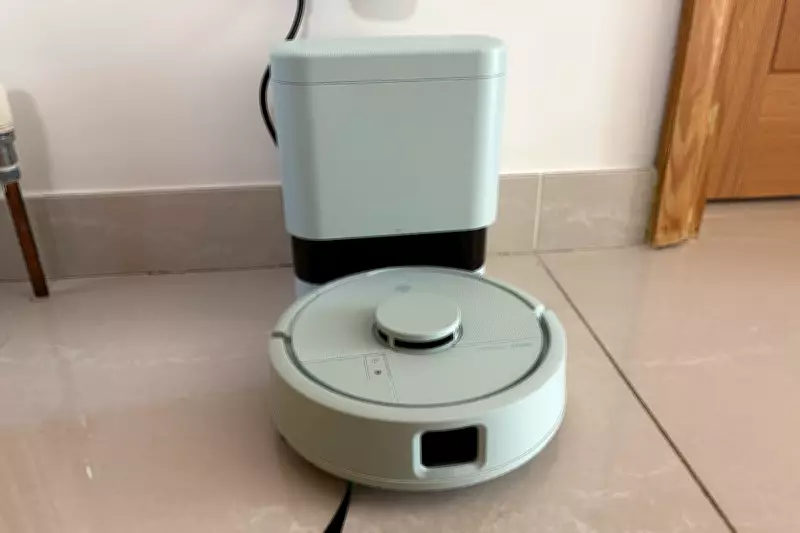
As an appliances expert who has tested numerous robot vacuums, I know how much space they typically occupy. Many models struggle in tight spaces or require significant clearance for their docking stations. The Roomba mini, however, measures just 24cm wide, with a docking station only 21cm wide. This makes it ideal for studios or one-bedroom flats where space is limited.
Upon unboxing, I was genuinely impressed by its compact size. In a home filled with black and grey appliances, the mint green design adds a refreshing pop of colour – it's also available in pastel pink. Setup was straightforward: I simply clicked on the brush and found a spot with about a meter of clearance on either side. The Roomba Home app guided me seamlessly through wifi pairing and mapping, without needing to consult an instruction manual. It created an accurate map of my ground floor and was ready to vacuum quickly.
Cleaning Performance: Surprisingly Powerful
I was sceptical that such a small device could handle the dirt and dust in my busy four-person household. However, testing revealed its ability to suck up fine and large debris with little issue. When I sent it to clean flour spilled on my kitchen floor, it picked it up effortlessly. Unlike some models that fling fine dirt away, the Roomba mini's brush guided debris into its path, leaving my tiled floor sparkling.
Robot vacuums often struggle on carpet, but the Roomba mini performed effectively on the one carpeted area in my house, though it was noticeably louder. A word of caution: avoid thick pile rugs. During testing, the brush got tangled in a rug pile, and the silicone arm broke off when I tried to free it. An extra or more durable brush would be appreciated.
Due to its small size, the battery drains quickly. When set to clean all five rooms on my ground floor, it managed three before the battery dropped to 21%, prompting an automatic return to the docking station. Charging took a couple of hours. Note that docking involves emptying collected dirt, which is incredibly loud – akin to a plane taking off indoors – and could disturb sleep or work calls.
Navigation and Obstacles: Agile and Efficient
The Roomba mini's floor coverage is excellent. It starts by cleaning room edges, then covers the centre, rarely missing spots. While circular vacuums aren't perfect for dirt embedded in edges, its brush did a good job sweeping debris into its path. It avoids most obstacles and cleans around furniture with ease, benefiting from its compact size to manoeuvre into tight spaces where standard models might struggle.
It even vacuumed between the legs of my office chair without issue. On rare occasions when it got stuck, such as on a kitchen stool base, it pushed itself off without intervention. Only once did it fail to return to the docking station, requiring my help. The main weakness is wires – it got caught in cables under my desk. Fortunately, exclusion zones are easy to set and are respected by the device.

Mopping Feature: Mediocre at Best
The mopping function uses attachable mop pads, unlike some models with on-board solution containers. The pad is easy to attach via picture instructions and picked up dust and dirt. However, compared to a budget-friendly Flash mop, it left noticeable streaks on my tiled floor. It's also more hands-on than pricier hybrids, and attaching the mop pad disables vacuuming mode. For a decent vacuum-mop hybrid, I'd recommend alternatives like the Roborock saros 10.
Verdict: Worth It for Space-Constrained Homes
If you're short on space, the Roomba mini is a reliable, easy-to-use option that won't break the bank. It tackles various dirt types on hard floors and carpet, offers excellent coverage, and has solid obstacle detection. Limitations include struggles with wires, thick pile rugs, and a mediocre mop function – I won't be ditching my cordless vacuum and mop yet. But it simplifies mid-week cleans, thanks to the intuitive Roomba Home app for scheduling and zoning.
Testing Methodology
I replaced my cordless vacuum for weeks, testing the Roomba mini on my open-plan ground floor. I evaluated vacuuming and mopping across multiple rooms, assessing cleaning effectiveness, ease of use, and obstacle handling. Criteria included:
- Cleaning: Performance on fine dirt like flour and larger debris like rice grains, on tiled floors and carpet.
- Design: Ease of finding space and aesthetic appeal.
- Ease of use: App functionality for mapping, scheduling, and setting exclusion zones.
- Navigation and obstacles: Ability to manoeuvre around furniture and wires.
- Mopping: Effectiveness on tiled floors and streak prevention.
Why trust this review? Sabrina Sahota has over five years of experience testing home appliances, including various robot vacuums, ensuring expert insights into value and performance.