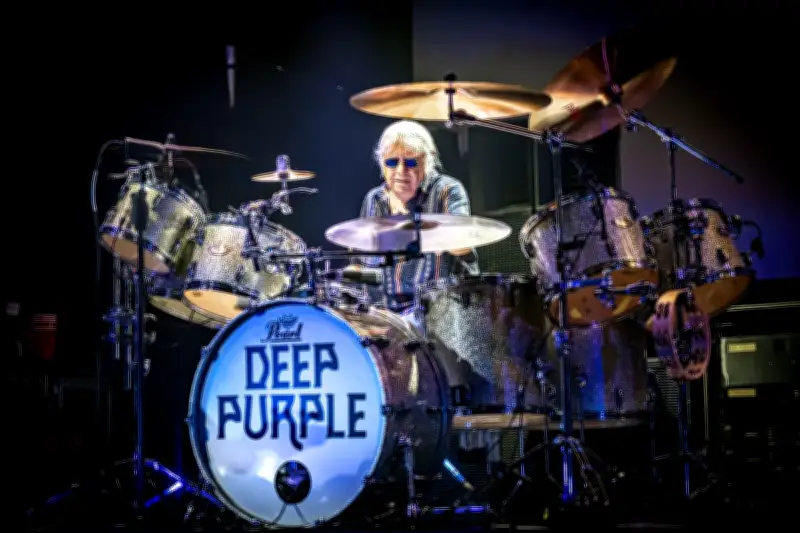
Deep Purple drummer Ian Paice has stated he would be willing for his drumming to be replicated by artificial intelligence (AI) as long as it is done with his consent and the public is aware it is not the real thing.
Paice's stance on AI replication
The 78-year-old musician, the only member to have played on every Deep Purple album, spoke ahead of the release of the band's latest LP Splat! on Friday. In an interview with the Press Association, Paice said: “As a business venture yeah (he would allow his drumming to be replicated by AI), but not as a gimme, it’s got to be done. Only if you knew, well if you died people don’t know do they? If it’s done with the consent of the artist, or the actor, or the ballerina, or whoever, then I don’t have a problem with it, but people must know that it’s not the real deal, then it’s not a problem.”
Concerns over hidden AI use
Paice warned that when information about AI replication is hidden from the public and the artist, it becomes a problem. “But where that information is hidden from people, that’s a problem, and especially if it’s hidden from the artist too. I don’t have a problem, whatever I am is my right to sell or not sell, but it’s not their right to take it.”

The Smoke On The Water drummer highlighted that due to AI, “the mass of the public believe they’re listening to people they’re not,” adding that often they are “listening to a computer algorithm.” He questioned the meaning of art if it becomes indistinguishable from computer-generated content: “At that point, what is art anymore? If you can’t tell the difference between a genuine artist and a computer programme, then art has no meaning, if there is no difference or you start to prefer the computer-generated product, that’s the problem.”
Call for legal protections
Paice emphasized the need for governments to implement laws protecting artists from having their likenesses, sounds, and art taken without consent. “If you take away any art form from humanity, you’ve lost a great deal because it’s the invention, all AI does is recreate somebody else’s idea, and suddenly if you can write a computer programme or push a button, you’re an artist. It’s definitely a problem, but it can be solved, but it just needs the people in control of the markets in the world, governments, to start putting laws in place to protect those people who are being infringed, having their likenesses taken, their sound, their very being, their art, their genius. Otherwise, what’s the point of doing anything?”
Deep Purple's legacy
Formed in London in 1968, Deep Purple has undergone numerous line-up changes. The most famous mark two line-up included Paice, singer Ian Gillan, guitarist Ritchie Blackmore, bassist Roger Glover, and organist Jon Lord. This line-up produced seminal albums Deep Purple In Rock (1970), Fireball (1971), and Machine Head (1972), credited with developing the heavy rock genre, featuring iconic songs like Highway Star, Speed King, and Black Night.