Prime Minister Andy Burnham has said he is open to Germany joining the Global Combat Air Programme (Gcap), the project developing a new sixth-generation fighter jet equipped with artificial intelligence.
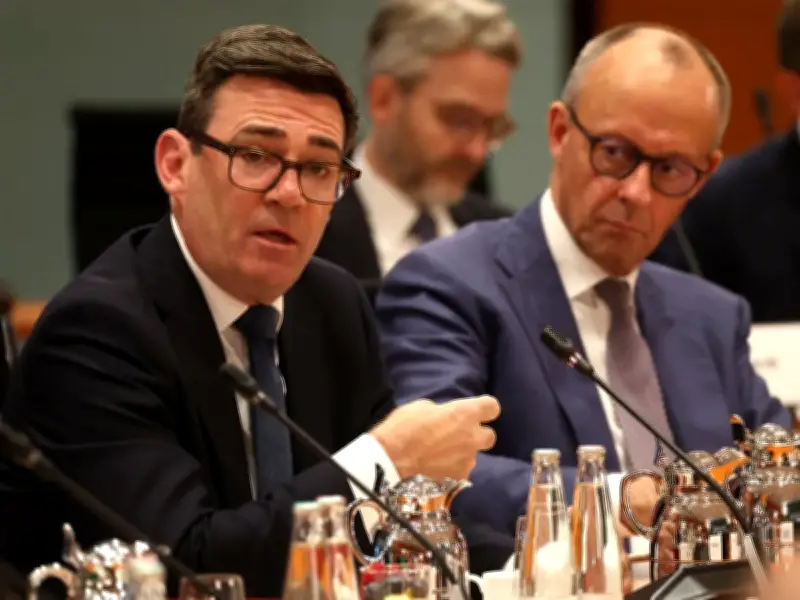
Speaking ahead of his first face-to-face meeting with German Chancellor Friedrich Merz in Berlin on Thursday, Mr Burnham said he had indicated to the Chancellor, before the ratification of a new agreement, that the UK was open to German participation in the programme, which currently comprises the UK, Italy and Japan.
Defence collaboration with Germany
Mr Burnham told reporters: "We are talking today about defence collaboration, and I've indicated to the Chancellor, in our discussion prior to this ratification, our openness to Germany joining Gcap, the next generation of fighter aircraft."
He added: "And that is something that we seek to progress in the coming period, working with our partners Italy and Japan, in relation to that as well."
Gcap is working to develop sixth-generation fighter planes to establish aerial superiority over rivals such as Russia and China. The jets will be equipped with cutting-edge technology, including next-generation sensors and AI. In July, Canada joined the group as an "observer nation".
Security talks and new threats
A Downing Street statement said: "The leaders spoke about the prospect of German participation in the Global Combat Air Programme (GCAP) to develop a 6th generation stealth fighter jet. They agreed closer collaboration on defence supports the interests of both countries, as well as our allies, and committed to tasking their teams to engage further on this issue."
The leaders' talks focused on security, including a new partnership aimed at tackling new threats the two nations face, including sabotage by hostile states. The Prime Minister stressed the importance of countering hybrid attacks, saying it was something both countries were "facing on a regular basis".
Mr Burnham also praised his counterpart after Germany brought in new laws to target smuggling gangs transporting migrants to the UK.
Background of recent tensions
Last month, the British Government summoned a senior Russian diplomat to protest over an attack at Germany's Leipzig airport, a major international freight hub used for providing support to Ukraine. A drone carrying explosives was found near Ukrainian cargo planes in August, but failed to explode and was subsequently defused.