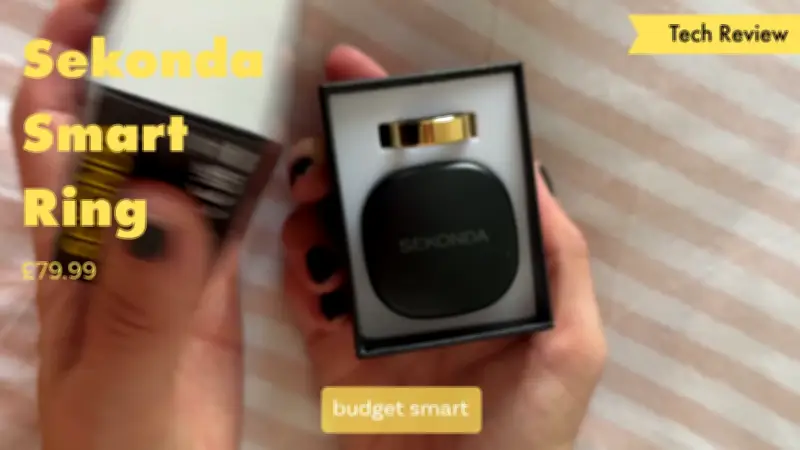
The Sekonda Smart Ring, launched on September 21 and priced at £79.99, impressed a reviewer with its surprisingly accurate workout tracking despite its sub-£100 price point. The ring tracks sleep, heart rate, HRV, SpO2, body temperature trends, activity, stress levels, respiratory rate, mood, fatigue, and more, and can help users track their menstrual cycle by syncing with apps like Clue and Flo, as well as Apple Health and Health Connect.
Design and Sizing
The ring comes in silver and gold, with the reviewer choosing gold to match her jewellery. It is described as chunky but lightweight, made from durable stainless steel rather than titanium. A free sizing kit is available on the brand's website, though the reviewer found herself between sizes 7 and 8. She noted the brand recommends sizing up, but found the larger size a little too loose after 24-48 hours of wear. The ring includes a silicone cover to prevent scratches during weight lifting, which the reviewer found easy to slip on and off, though slightly uncomfortable when holding weights.
Setup, Battery, and Features
Setup took about five minutes via a free app, requiring Bluetooth and the phone to be nearby. Charging is done via a compact portable case, similar to Apple AirPods, which needs charging before use and can handle up to five charges before needing a recharge itself. The ring's battery lasts six or seven days, despite constantly tracking metrics with its sensors.
The ring can track over 120 different workout options, from weight training and HIIT to swimming (water-resistant up to 50m), dancing, rock climbing, gymnastics, and more, including curling, fishing, hula hoop, frisbee, and billiards. However, the reviewer noted surfing and netball are missing. It can sync with various apps and notify users of calls, messages, and other notifications via a simple vibration pattern.
Accuracy and Value
Comparing its data with her smart watch, the reviewer found the ring's sleep, activity, calorie burn, heart rate, and steps to be pretty accurate. However, on occasion, it tracked her wind-down bedtime reading as light sleeping, and once recorded 11 hours of sleep versus her watch's nine-hour reading. The ring also failed to record when she woke up in the night, possibly due to the ring moving during sleep.
Workouts were spot-on with timing, calories burned, and heart rate, though workouts must be manually selected when starting. The reviewer noted the Samsung Galaxy Ring offers Auto Workout Detection, which tracks activity without manual logging.
At £79.99, available from Sekonda, Argos, Amazon, and H Samuel, the ring is described as a more-than-worthy investment with no additional subscriptions required. The reviewer noted that for higher-end, clinical-grade precision, the Oura (£599), Samsung Galaxy (Android only), or Ultrahuman Ring Air Space may be better suited, though they are much pricier. The Oura charges £5.99 per month for full app access, while the Sekonda is a one-time purchase. The reviewer also noted that the Sekonda's vital sign sensors must stay positioned on the underside of the finger, unlike the Oura's Smart Sensing technology, but found the ring did not twist too much in practice.