Authors Stage Unprecedented Protest Against AI Copyright Infringement
In a dramatic demonstration of creative industry discontent, nearly ten thousand authors are preparing to publish an entirely empty book as a powerful protest against technology companies using their copyrighted works to train artificial intelligence models without consent or compensation.
Literary Giants Join Forces
The protest movement includes some of Britain's most celebrated literary figures, with prominent names such as Jacqueline Wilson, Kate Mosse, Cecelia Ahern, Sir Kazuo Ishiguro, Sebastian Faulks, Jeffrey Archer, Antony Beevor, and Jeanette Winterson lending their support to the campaign. Their symbolic publication, titled 'Don't Steal This Book', represents a stark visual statement about what they perceive as the wholesale appropriation of creative labor by artificial intelligence developers.
This follows similar actions by musicians including Sir Elton John, who previously released a blank album to protest against their work being used without permission. The creative community appears increasingly unified in its opposition to what many describe as systematic exploitation by technology corporations.

Government Delays Controversial Decisions
The protest emerges against a backdrop of political uncertainty, with reports indicating that ministers are planning to delay making difficult decisions regarding artificial intelligence copyright regulations following significant backlash from creative professionals. According to multiple sources, the government has abandoned contentious proposals that would have made it easier for artificial intelligence companies to access copyrighted content without proper authorization.
The Financial Times reported that one individual with knowledge of the government's response to a two-month consultation on artificial intelligence and copyright indicated that definitive decisions would be 'kicked down the road', reflecting the complexity and controversy surrounding this issue.
Economic Claims Dismissed as 'Fantasy'
Simultaneously, new analysis has cast serious doubt on technology companies' economic arguments for weakening copyright protections. A comprehensive review conducted by management consultants Oliver and Ohlbaum examined modeling presented by technology firms and concluded that their claims represented what campaigners describe as 'fantasy economics'.
The review, commissioned by the News Media Association, Publishers Association, and Publishers' Licencing Services, found that none of the economic modeling reports from Microsoft/Public First, the Computer & Communications Industry Association, or the Centre for British Progress provided credible evidence that diluting copyright protections would deliver net economic growth for the United Kingdom or provide competitive advantages.
Campaign Organizer Speaks Out
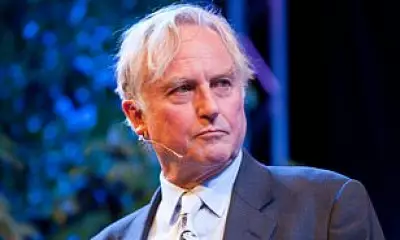
Ed Newton-Rex, a composer and the organizer behind the protest campaign, delivered a powerful indictment of current practices: 'The artificial intelligence industry is fundamentally built on stolen work - the life's work of writers and other creative professionals, taken without permission or payment. This is not a victimless crime. Generative artificial intelligence directly competes with the very people whose work it is trained on, effectively robbing them of their livelihoods.'
Newton-Rex continued with a direct appeal to policymakers: 'The government must protect the United Kingdom's creative community and refuse to legalize the theft of creative work by artificial intelligence companies.'
Flawed Economic Assumptions Exposed
The Oliver and Ohlbaum analysis identified significant flaws in technology companies' economic arguments. Their review determined that the reports incorrectly assumed copyright represented the primary constraint on artificial intelligence growth while ignoring more substantial barriers including skills shortages and energy limitations. None of the examined reports adequately explained why altering copyright regulations would prove decisive for British competitiveness in the global artificial intelligence landscape.

Owen Meredith, Chief Executive Officer of the News Media Association, summarized the findings: 'Oliver and Ohlbaum's rigorous analysis exposes Big Tech's claims that degrading copyright will deliver economic growth for what they truly are: fantasy economics. The modeling they rely upon ignores the genuine constraints on artificial intelligence deployment in the United Kingdom and completely fails to account for the catastrophic consequences that weakening copyright would have for our world-leading creative and media sectors.'
Broader Campaign for Fair Treatment
The protest aligns with broader campaigns advocating for authors, publishers, and musicians to receive fair compensation for their work and to have their copyright protections respected. Technology giants have been seeking exemptions from copyright legislation that would allow their artificial intelligence systems to learn from creative works without providing payment or credit to original creators.
As the debate intensifies, the creative community's symbolic action - publishing thousands of empty books - serves as both protest and warning about what they perceive as an existential threat to artistic professions in the age of artificial intelligence.