Thousands of Authors Launch 'Empty' Book in Protest Against AI Copyright Theft
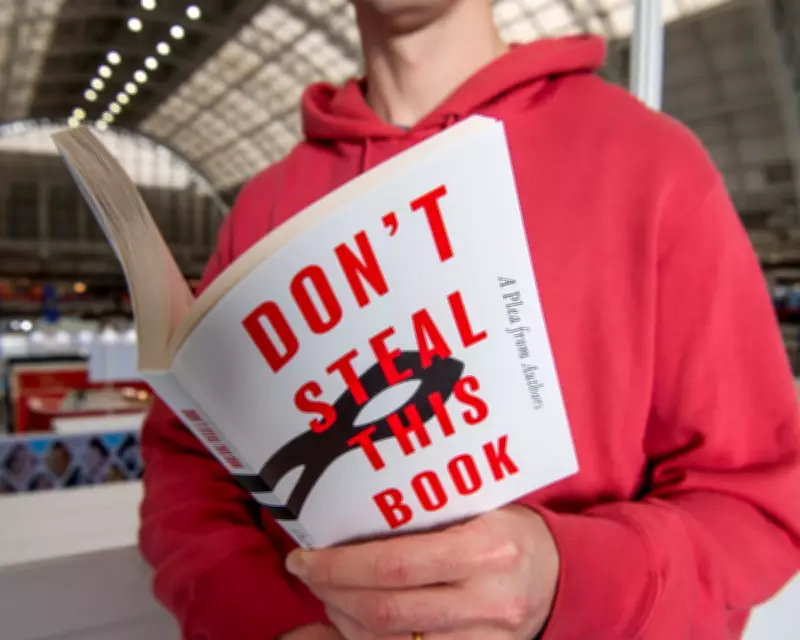
In a striking demonstration of solidarity, approximately 10,000 authors, including literary giants such as Kazuo Ishiguro, Philippa Gregory, and Richard Osman, have published a book titled Don’t Steal This Book, which contains no traditional content beyond a list of their names. This symbolic act serves as a powerful protest against artificial intelligence firms utilising their copyrighted works without permission or compensation. Copies of the book are being distributed to attendees at the London Book Fair this Tuesday, strategically timed just one week before the UK government is due to issue a critical assessment on the economic implications of proposed changes to copyright law.
Government Deadline and Creative Sector Outrage
By March 18, ministers are obligated to deliver an economic impact assessment and a progress update on a consultation regarding a legal overhaul of copyright regulations. This comes amid widespread anger among creative professionals who feel their intellectual property is being exploited by AI companies for training data. The backdrop of this protest highlights a growing tension between technological innovation and artistic rights, with many fearing that the government may prioritise speculative AI gains over the protection of UK arts.
Ed Newton-Rex, a composer and campaigner for artists' copyright who organised the book, has been vocal in his criticism. He asserts that the AI industry is fundamentally "built on stolen work ... taken without permission or payment." Newton-Rex emphasises that this is not a victimless crime, as generative AI systems directly compete with the very creators whose works they are trained on, potentially robbing them of their livelihoods. He urges the government to take a firm stand, stating, "The government must protect the UK’s creatives, and refuse to legalise the theft of creative work by AI companies."

Widespread Support from Literary Figures
The protest has garnered support from a diverse array of authors, including Mick Herron, known for the Slow Horses series; bestselling novelist Marian Keyes; historian David Olusoga; and Malorie Blackman, author of Noughts and Crosses. Blackman has expressed her stance clearly, noting, "It is not in any way unreasonable to expect AI companies to pay for the use of authors’ books." The back cover of Don’t Steal This Book reinforces this message with a bold declaration: "The UK government must not legalise book theft to benefit AI companies."
AI Licensing Initiatives and Legal Battles
In response to the ongoing controversy, publishers are launching an AI licensing initiative at the London Book Fair. Publishers’ Licensing Services, a non-profit industry body, is establishing a collective licensing scheme and has invited the sector to participate, aiming to provide legal access to published works for AI training. This move comes as AI development relies heavily on vast datasets, including copyright-protected materials scraped from the open web, to create tools like chatbots and image generators. This practice has sparked global consternation, leading to numerous lawsuits in both the UK and the US.
For instance, last year, Anthropic, a leading AI firm behind the Claude chatbot, agreed to pay $1.5 billion (£1.1 billion) to settle a class-action lawsuit filed by book authors who accused the startup of using pirated copies of their works to train its flagship product. In the UK, artists have reacted with outrage to a key government proposal in the consultation, which suggests allowing AI firms to use copyright-protected work without owner permission unless the owner explicitly opts out. High-profile figures like Elton John have condemned this prospect, labelling the government "absolute losers" for considering such a relaxation in copyright law.
Government Options and Ongoing Concerns
Beyond the main proposal, ministers have outlined three additional options for consideration:

- Leaving the current copyright situation unchanged.
- Requiring AI companies to obtain licences for using copyrighted work.
- Allowing AI firms to use copyrighted work with no opt-out mechanism for creative individuals and companies.
Furthermore, the government has not ruled out a copyright waiver for "commercial research" purposes, a move that creative professionals fear could be exploited by AI firms to appropriate artists' work without consent. A government spokesperson has responded, stating, "The government wants a copyright regime that values and protects human creativity, can be trusted, and unlocks innovation. We will continue to engage closely with the creative sector on this issue, and we will meet our commitment to update parliament by March 18th."
As the debate intensifies, this protest by thousands of authors underscores the urgent need for balanced policies that safeguard intellectual property while fostering technological advancement. The distribution of Don’t Steal This Book at the London Book Fair serves as a poignant reminder of the human creativity at stake in the AI era.