Sam Altman Issues Stark Warning on Open-Source AI Risks at Delhi Summit
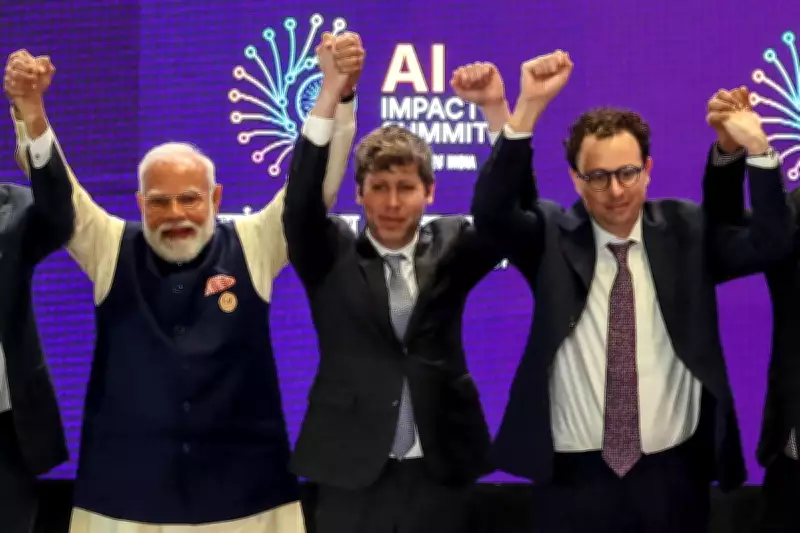
OpenAI chief Sam Altman has issued a stark warning that rapidly advancing artificial intelligence systems could soon be powerful enough to assist in the creation of new pathogens. This caution came as world leaders and big tech CEOs gathered in Delhi for the India AI Impact Summit, a major global event focused on governing the technology that is reshaping economies and geopolitics.
Global Leaders Advocate for AI Governance and Coordination
Addressing a packed plenary hall of 7,000 attendees, Mr Altman emphasised the urgent need for society-wide preparedness to respond to evolving AI threats. He highlighted that extremely capable biomodels, available open-source, could potentially enable individuals to develop new pathogens. To counter this, he proposed an international coordination body similar to the International Atomic Energy Agency (IAEA), suggesting the world may require a dedicated agency for AI oversight.
The summit, billed as the largest global AI gathering in the developing world, saw heightened security on its fourth day, with police blocking several roads around the Bharat Mandapam venue in central Delhi. Over 250,000 people had signed up for the exhibition, underscoring the event's significance.

Economic Promise and Risks of AI Discussed
During the ceremony, AI's economic promise was repeatedly invoked, but so were its inherent risks. Mr Altman acknowledged that automation would disrupt labour markets, yet expressed confidence that humanity would adapt by finding new and better roles. He also warned against concentrating AI technology in a single company or country, stating it "could lead to ruin" and that the next few years will test global society's ability to either empower people or concentrate power.
United Nations secretary-general António Guterres echoed these concerns, cautioning that AI's future must not be dictated by a handful of countries or billionaires. He proposed a $3 billion global fund to assist developing nations in building AI skills, data capacity, and affordable computing infrastructure, noting this amount is less than one per cent of the annual revenue of a single tech company. Without such investment, he warned, many countries risk being excluded from the AI age.
International Collaboration and India's Ambitions
French president Emmanuel Macron highlighted the geopolitical implications of graphics processors and chips, praising India's digital public infrastructure, including its biometric identity system and real-time payments network, as unparalleled globally. He urged democratic nations like France and India to collaborate in shaping global AI rules rather than leaving them solely to market forces.
The summit underscored India's ambition to position itself as a co-architect of AI's next phase, not just a consumer. During the event, three India-made AI models were launched, including Sarvam AI, tailored for Indian needs compared to global counterparts like ChatGPT and Claude.
Tech Leaders Emphasise Inclusion and Infrastructure
Google chief executive Sundar Pichai described AI as "the biggest platform shift of our lifetimes" and warned policymakers to prevent the digital divide from becoming an AI divide. He outlined plans for a new full-stack AI hub in Visakhapatnam, part of an £11 billion infrastructure push in India that includes subsea connectivity and large-scale computing facilities.
Indian prime minister Narendra Modi, who inaugurated the leaders' segment, called for AI to be developed as a "global common good" and urged countries to establish shared standards. He emphasised that AI must be democratised to serve as a medium for inclusion and empowerment, particularly in the Global South.
Controversies and Logistical Challenges
The event was not without controversy. Microsoft co-founder Bill Gates withdrew from delivering a keynote address, with his foundation stating the decision was made to keep focus on the summit's key priorities amid criticism over his past association with Jeffrey Epstein. Additionally, tight security, traffic disruptions, and road closures throughout the week led to logistical challenges, including long queues for delegates and complaints about missing equipment due to sudden security sweeps.