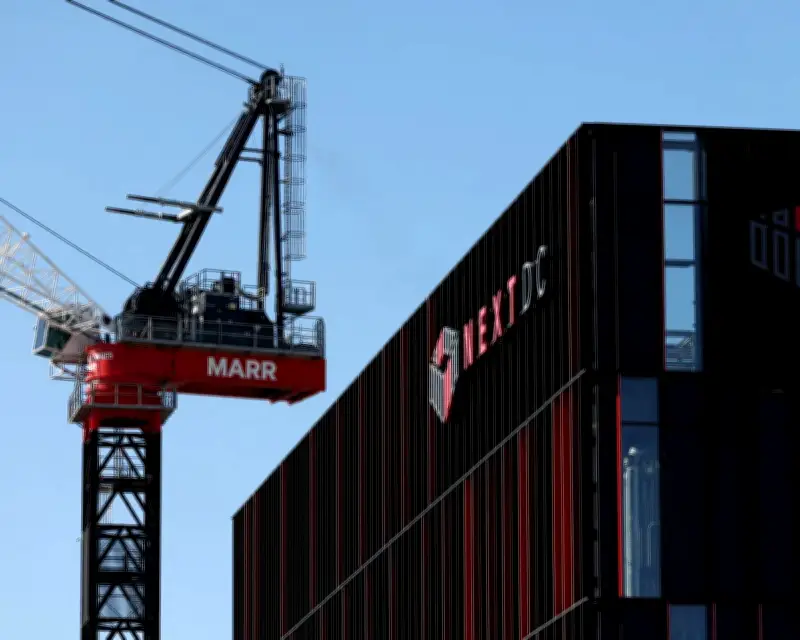
New data suggests the AI boom is delivering lots of energy-hungry datacentres but little else in terms of economic benefits, according to Guardian columnist and Australia Institute chief economist Greg Jericho.
While non-residential construction, which includes datacentres, has increased, it is not at booming levels and wages have not been taking off. The June quarter construction figures, released on Wednesday, showed overall construction fell 2.1%, driven by a fall in engineering construction.
Investment not translating into better living standards
Jericho noted that booms in investment usually lead to economic growth, but this one looks unlikely to translate into better living standards for Australians. He pointed out that the "investment" involves importing things like data processing chips, and any profits from the investment (should that even occur) flow overseas.

The Australian Financial Review asked: "We're told business investment is key to boosting productivity, but what if the spending involves importing computer equipment?"
Construction figures and GDP impact
While non-residential building work (which includes datacentres) increased, it was not enough in the three months of the June quarter to cancel out the fall in engineering work. This suggests total construction activity will detract about 0.3 percentage points from the June quarter GDP figures, whereas it contributed about 0.5% to the March quarter.
The good news is that, because construction and building work at the end of last year and early this year was big enough, overall construction work is still having a positive impact on the annual growth of the economy.
Wages and capacity concerns
The Reserve Bank of Australia has expressed concern that such investment is causing capacity constraints, with too much activity going on and inflation going up as a result. The total level of construction work in volume terms is now higher than it was at the height of the mining boom.
However, wages for construction workers are not taking off. In the June quarter, the average wage of construction workers in the private sector rose at an annual rate of just 3.3%, barely above the overall average for the private sector of 3.2%.
While non-residential building work is at relatively high levels, it is nowhere near the type of boom seen in the 2000s. The main economic impact of the AI boom appears to be computer chips bought from elsewhere, and it remains unclear whether it will ever translate to wages and improved living standards.