Fried eggs might look like one of the simplest breakfasts to make, but getting the yolk just right without it breaking or staying undercooked takes proper technique. Many home cooks simply crack an egg straight into a frying pan, but this can make the whites cook much faster than the yolk because they are exposed to more heat.
That can leave the whites crispy or even burnt before the yolk has properly set, resulting in a watery centre that is rather unappetising. Some recipes suggest spooning oil over the yolk while the egg cooks, but this raises the risk of it breaking apart or drying out, leaving a rubbery texture on top.
The simple lid trick
Charlotte Oate, the creator of Charlotte's Lively Kitchen, has revealed that achieving a perfectly runny yolk is surprisingly straightforward — all you really need is a pan lid.

She said: "When I was about twenty, I remember a friend, who worked as a chef at the time, explaining to me the secret of cooking a good fried egg - using a lid to circulate heat around the egg. This helps the top of the white to cook without overcooking the bottom of the white or the yolk."
It may sound remarkably simple, but most people overlook adding a lid when frying an egg, and it is crucial if you are aiming for that ideal springy yolk rather than an unevenly cooked disappointment.
Why the lid works
Using a lid helps retain more heat around the yolk, preventing it from dissipating into the air and ensuring the top of the egg cooks at the same pace as the bottom. A lid also helps generate steam, which aids in cooking the yolk, so you need not worry about leaving a translucent centre.
Not only does this technique prevent the whites from burning, but you will not actually need to use oil or butter to baste the yolk, allowing you to produce a considerably healthier fried egg should you wish.
How to cook a fried egg yolk properly
You will need:
- One large egg
- A cooking spray
- Salt and pepper
- A frying pan with a glass lid
- A spatula
Using a pan lid means you can cook an egg with just cooking spray, though olive oil or butter is a perfectly acceptable alternative. A cooking spray is the recommended option, however, as it results in a less greasy fried egg while also preventing hot oil or fat from spitting out of the pan during cooking.
Method:
To start, place a pan over a medium-low heat and coat it thoroughly with cooking spray. Move the pan around as it warms up to ensure the spray is distributed evenly across the surface. Once the pan is sufficiently hot, carefully add the egg. It may be easier to crack the egg into a bowl beforehand and then transfer it to the pan.
Leave the egg completely undisturbed for two minutes until the white begins to appear cooked, then place a lid over the pan. Continue cooking for approximately two more minutes.
Keep a watchful eye on the egg at this stage, as it can overcook quite easily. You are aiming for a yolk that looks firm and jammy rather than dry or crumbly. To check whether your egg is ready, gently shake the pan — it should appear set, yet the yolk ought to still visibly wobble when perfectly cooked. Remove from the heat straight away once done.
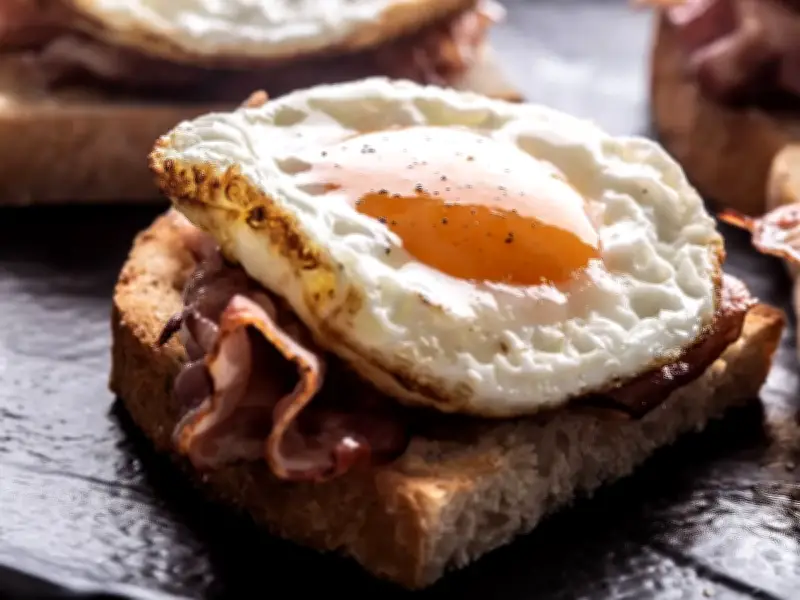
Serve on a plate or slice of toast, and the fried egg yolk should look tender yet thoroughly cooked through.