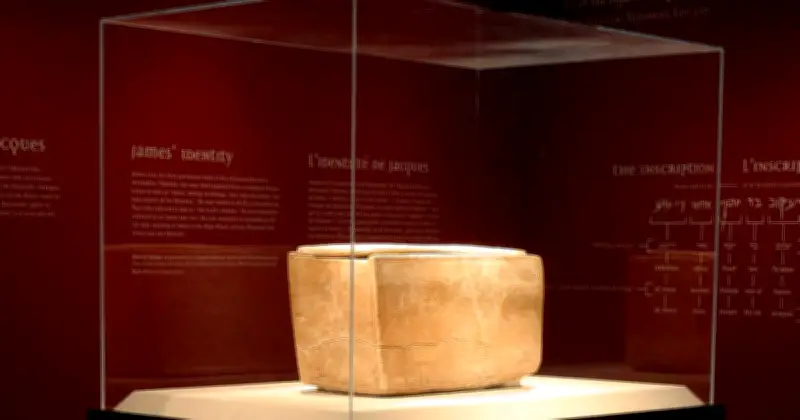
A limestone burial box dating back approximately 2,000 years has been described as one of the most significant archaeological discoveries potentially connected to the time of Jesus Christ. Known as the James Ossuary, the artefact measures roughly 21 inches long and 10 inches wide. It carries an inscription in ancient Aramaic that reads, “James, son of Joseph, brother of Jesus,” with bone fragments also reportedly discovered inside the box.
Authenticity questioned
Biblical scholar Dr Jeremiah Johnston told the Daily Mail: “If it is truly his, we are looking at the only known archaeological artefact directly connected to the family of Jesus of Nazareth.” However, in 2003, the Israel Antiquities Authority concluded that part of the inscription had been added in modern times to an otherwise genuine ancient ossuary.
The owner, Israeli antiquities collector Oded Golan, claimed to have purchased the artefact in the 1970s. He was accused of adding the words “brother of Jesus” to an existing inscription and applying an artificial patina to make the lettering appear ancient. The controversy led to what Johnston described as “one of the most unusual trials in the history of archaeology.”
Trial and acquittal
In 2012, Golan was acquitted of the forgery charge. However, the judge emphasised that the verdict did not establish the inscription's authenticity or prove that the artefact was connected to the Jesus described in the Bible. Despite this uncertainty, Johnston argues that Golan's acquittal, alongside support from prominent experts in ancient inscriptions, strengthens the case that the lettering could be genuine.
He also challenges the theory that a later Christian follower added the reference to Jesus centuries after the ossuary was created. His reasoning is based on the fact that the Jewish custom of collecting bones in ossuaries largely ended in Jerusalem after the city was destroyed in AD 70.
Evidence and future plans
Dr Johnston argues the dating aligns neatly with the historical record. He added: "If James died in AD 62, custom says his bones were gathered about a year later, around AD 63...that is precisely the window the ossuary's style and epigraphy point to."
The claim that the inscription was authentic was also supported, during the trial, by two researchers from the Geological Survey of Israel. Yet the same agency later endorsed separate findings suggesting the mineral coating within the carved letters could not have developed naturally under the region's environmental conditions. Ada Yardeni, a highly regarded Israeli expert in ancient handwriting, testified in defence of the inscription's authenticity, Dr Johnston said.
A family photograph from 1976 depicting the ossuary with its contested inscription also featured prominently in Golan's defence. A photographic specialist told the court that the paper and fading matched the image's purported age, with no signs of manipulation detected.
Dr Johnston and a team of specialists plan to conduct DNA analysis on the bone fragments recovered from the ossuary in 2027, a step that could shed further light on the artefact's origins. If the chest proves genuine, it would be the only known archaeological object with a direct link to the family of Jesus of Nazareth.