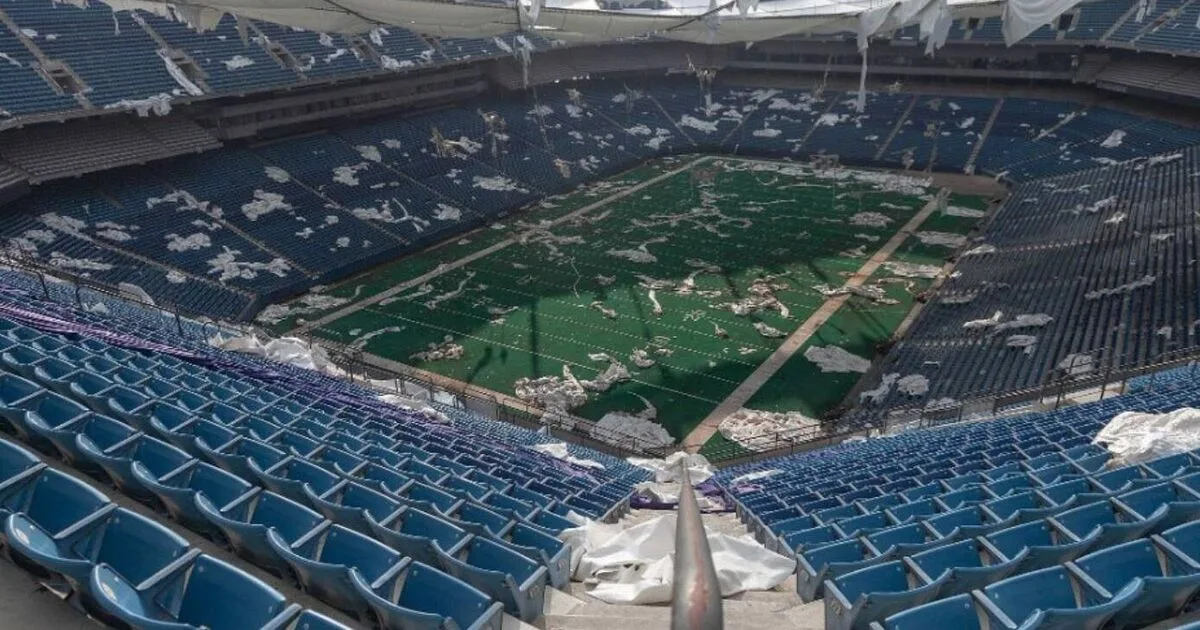
The Pontiac Silverdome, once a £41 million state-of-the-art stadium that hosted matches during the 1994 FIFA World Cup, was sold at auction in 2009 for just £430,000 — a sum comparable to the price of a modest two-bedroom flat in London. The 80,300-seat venue, which was the largest in the NFL until 2001, had fallen into disrepair after its primary tenant, the Detroit Lions, moved to Ford Field in 2002.
Built in 1975, the Silverdome was notable for its air-supported fibreglass fabric roof, the first such use in a major athletic facility. It staged iconic events including Super Bowl XVI, Wrestlemania III, and a visit by Pope John Paul II in 1987. During the 1994 World Cup, it hosted four matches, including the opening game between the USA and Switzerland.
After the Lions' departure, the stadium became a financial burden. In 2013, the roof collapsed during a snowstorm, and the structure was left to decay. Photographs showed moss growing over rotting seats and debris covering the pitch. The Silverdome was finally demolished in 2017, with explosives bringing down the last remnants after an initial failed attempt.
The site has since been repurposed as an Amazon fulfillment centre. As the United States prepares to co-host the 2026 World Cup, the Silverdome serves as a cautionary tale about the long-term viability of large sporting venues. Of the 16 stadiums to be used in 2026, 11 are in the US, and questions remain over whether they will avoid a similar fate.