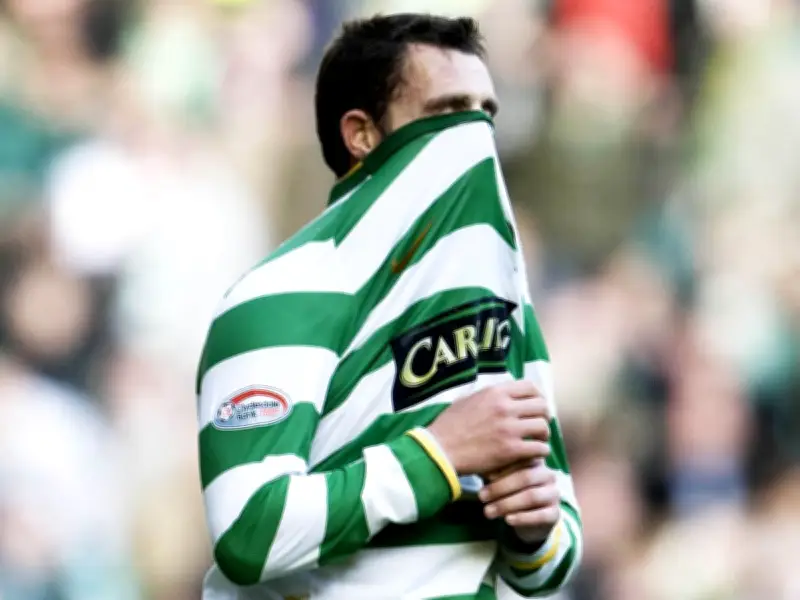
Scott McDonald was just entering his peak years at Celtic. At 26, the Australian goal machine was hitting his prime. Yet football has a tendency to throw a curveball when you least expect it. After flourishing under Gordon Strachan, Skippy's career changed direction under Tony Mowbray. Suddenly, his 63 goals across two-and-a-half seasons counted for nothing and he was no longer wanted.
The Turning Point Under Tony Mowbray
Mowbray had other plans as Celtic pushed the panic button in January 2010 in a desperate attempt to claw back the gap on runaway leaders Rangers. A flurry of loan signings — including Robbie Keane and Diomansy Kamara — arrived out of nowhere. Stalwarts like skipper Stephen McManus, Gary Caldwell and Barry Robson abruptly headed in the opposite direction. It was a revolving door and top scorer McDonald was last to be punted in a shock £3.5 million switch to Middlesbrough.
Just like that, the talismanic hitman was gone. It seemed a knee-jerk decision by a manager who was fighting to save his job. But McDonald knew long before his deadline day exit on February 1 that the writing was on the wall.
Revealing the Inside Story
In an exclusive interview with Record Sport, the ex-Hoops star revealed he had no choice but to leave the club he loved. He said: "It culminated just in terms of the relationship with the lack of trust, probably within the manager and me at the time, and then everything culminating in Gordon taking the job at Middlesbrough. He was my ex-manager who I worked so well under at Celtic and the emotion of all that now that you're a lot older was a big part in that. We signed Marc-Antoine Fortune and it was always the manager's idea that he wanted to play him more."
"When you're a young man at the top of your game and believe you are the best person scoring goals at the club, then it's not where you want to be with your manager. It's not to say we never got on because there was never a fallout, but it was just never there. The icing on the cake was we played Rangers in the New Year's fixture and I wasn't playing. It was kind of put to me after that that Tony didn't want me at the club from others externally working their ways. So that set everything alight from there and triggered a lot of things that happened."
Chaotic Transfer Window
McDonald described the chaotic atmosphere: "It was quite chaotic because the manager made it chaotic because of his ideas. The board had to back him, they brought him in, you understand that as a player you get that. Was it right? Over time, it tells you it wasn't at that time. Every player has a sell-by date; some go before that date expires, some stay after it and rot. For me, it was probably before my expiry, but it was just a situation that you find yourself in at times in football that you fit, or you don't fit for certain managers, and you move on."
Reflecting on His Celtic Career
There's no doubt that McDonald's Celtic career ended earlier than it should have. This was a player who, just two seasons after playing the pantomime villain on Helicopter Sunday, struck 31 goals to fire Celtic to one of the most emotional titles in their history — coming just days after the passing of Tommy Burns. Having lifted a title and League Cup, the boyhood fan still had more to achieve in green and white.
But he said: "Should I have left? Could I have done things differently? Yeah, absolutely, in a bigger picture world, leaving Celtic is always a tough one for any player. It was tough moving on from that period, but for me it felt right at the time and that's why it happened. I'll never regret it because it's moments like that that define you, and you live with them. Pretty much everyone won out of it at that moment financially, so it was a win-win for everyone on that end, and then it was on to Middlesbrough from there and never looked back."
Reunion with Strachan and Mowbray
Skippy was reunited with Strachan and several of his ex-Hoops teammates at the Riverside. But unlike his trophy-laden spell in Glasgow, Strachan was axed within the year. The man McDonald had only just escaped at Parkhead was soon appointed as his successor. You couldn't write the script. He laughed: "It's a good book someday, I'll tell you that. I know that I wasn't the easiest to get on with at times as well and can easily look through a different lens to what I used to look at. I think both of us could have done a lot better at certain times. I think in the end he realised I was a good player. That's all I ever wanted. If you're a leader and you're a coach, all the individuals want is your trust and for you to make them understand that you think they are good. If you're not getting that from your coach, you're in the wrong place. It felt like that for big periods. But I think by the end we could shake hands and go, 'Yeah, okay, you're a good coach. Well, you're a good player.' And that was that. I left at that and I've got peace with it."
Thriving at Middlesbrough
Unlike the rest of the Scottish contingent, McDonald thrived at Boro and finished two of his three seasons as top scorer before parting ways for Millwall. He added: "I loved it and have a real great affinity with that club. A real soft part of my heart in there because my two kids were born there as well. The career is a long one and the journey that you go on and the lessons you learn. You take them for good or for bad and in that period there was a bit of everything in that. But you look back and still think it was a really good time."